All posts by CarlValeri

Host of Aviation Careers Podcast. For more about me go to AviationCareersPodcast/About.

ACP107 Be clear on what you want your career lifestyle to look like

PlaneShadowWelcome to another question and answer show of Aviation Careers Podcast! Tonight I am joined by Eric Crump and Paul Grieco to tackle your questions about moving forward in your Aviation career. We start with a comment from Tom Wachowski, who recommends that you get clear on what you want your career lifestyle to look like. From how much money you want to make, to where you want to live, to what kind of plane you want to fly, it’s important to know what you want to achieve.

  • A success story about now flying in a KingAir, and recommending My Flight Book electronic log book. Eric has used Zulu and Foreflight. Paul uses LogTen Pro X.
  • A listener recommended a guide to abbreviations and nicknames in aviation, and asked for a recommendation on the University of Cincinnati and Sporty’s Flight Academy partnership. Eric recommended the Pilot Controller Glossary for abbreviations. Eric said this training program is a model for a good program.
  • Request for a show on what to do once you get your Private Pilot’s License and some of the flying clubs and sharing options for using airplanes.
  • Thank you to everyone involved with this show, you are an inspiration to those of us on our journey to be a pilot.
  • While working 60-80 per week, graduated Magnum Cum Laude from Embry Riddle, goal is to work as an Airport Manager. He is going for his Master’s degree, which the hosts recommended because it commands more money.
  • Request for a recommendation of Spartan in Tulsa vs. Part 61.

Photo Credit:
@pilotmandi Instagram

ACP106 Working Towards Your New Career While Supporitng a Family

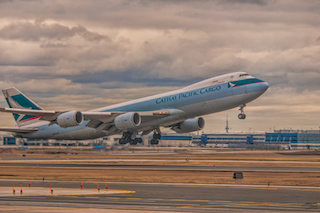
KenMist747CathayPacificWelcome to episode 106 of the podcast where we help you move toward your career goal. Hearing your stories of achieving your career goal keeps us motivated and helps inspire others. Please keep sharing your success stories including your challenges along the way toward your goal.

In this episode we answer your questions. You will notice many focus on supporting family while working on completing your ratings, degrees, and finding a job. This can be challenging to say the least but we have some encouraging news: You can do it! We relate some of our own experiences and those of our listeners to help you keep motivated while in the challenging position of supporting a family and moving toward your career goal.

Joining Us on the Podcast today are Carl Valeri, Tom Wachowski, and Paul Grieco. If you have any questions for the individual hosts or a general questions please don’t forget to click on the contact tab and we will answer your question as soon as possible. We also provide coaching services to discuss your individual needs in a more private setting. Click on coaching to find out more. Now on with the show.

Reader Questions:

  • I’m having a hard time seeing how I could support the family while in a full time training program
  •  For the first time in my life I found something that I truly desire to learn about. My wife is completing her last year of medical school this spring and will graduate with her MD and a ton of debt in May. Her profession is much like one in aviation where she will start out right at about the same salary with 60­80hr work weeks, but over the next 10 years salary will continue to increase.  ow that I feel I have found my true passion in life is to fly, that has changed.  would like to become an airline pilot or corporate pilot. (I might know the answer after I get through the Private Jet Podcast series!) ­What do you think the best way to go about this is with my financial obligations (loans, family, etc.)?  ow do I become an airline pilot while working a career? Is it possible?
  • Success story from a new Part 135 Pilot.
  • My first love is not really to teach but to fly for an airline, so my emotions tell me to do multi and ifr and take the risk by applying for cathay pacific and hopefully get hired in the next couple of years tops.
  • What do I need to do to make sure I am competitive for airline positions.

Links Mentioned in this podcast:

Cathay Pacific Cadet Program

Coaching

Photo Credit : Ken Mist Photography.

ACP105 Are You Too Old To Fly?

CarlPostFlightWelcome to Episode 105 of the podcast where we inspire you to achieve your career goals and live your dream by following your passion and doing a job you love. Today is a spacial episode where we help you answer one question: Are You too Old To Fly? This is probably the most common one we get from you the listener so lets address it right now! Both myself and my co host this eventing began our aviation careers late in life and left very lucrative careers to pursue our passion and become an airline pilot.

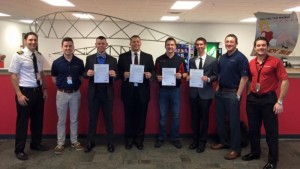

Paul and I discuss what led us to make our decision to give up the life we had and move forward in a new direction. For my entire life I have lived outside my comfort zone but there are some important things we must consider when deciding if we should pack it in and start our new career.

Before we begin don’t forget if you want to contact us please visit AviationCareersPodcast.com. There you will find many ways to contact us along with our other services such as career coaching, the scholarships directory, and our interview preparation services which is included on the coaching page. I want to apologize to those that have called into the show but since we have grown it has been impossible for me to call each and every one of you back individually.

Therefore if you can please send me an e-mail because many times I may only be available to talk at 3 am and since I don’t want to disturb you and your family in the middle of the night the best way to get in touch with me is through the website. Also if you have a question please write into the show and we will answer them. We will exclude all of your personal information.

Paul and I discuss:

  • How we both began our new careers late in life: mine at 33 and Paul’s at 34.
  • It’s not just about the money.
  • Why planning is so very important when making a career change.
  • Why you should include your family in the discussion.
  • Who to include in your inner circle.
  • Being realistic with your salary expectations.
  • How many years until you reach your goals?
  • What it is like to do something you love and fly for a living.
  • Why you need a checklist to succeed.
  • T Chart.
  • Are you Too old to fly?

ACP104 Making a Good Job Great


SXM 737Making a Good Job Great! Welcome to Episode 104 of the podcast where we give you an inside look at the various aerospace careers and inspire you to move forward towards your career goals.

Most of us start our careers following our passion. We then move forward toward a career we feel will fulfill our passions. During the varied journey we must choose a path and at times make decision such as where we want to live, who we want to marry, and how we want to raise our children. The job of airline pilot allows us to live anywhere in the world we choose but also comes with challenges including commuting long distances to work.

Recently while flying with a wise Captain he said something that really resonated with me and applies to my most recent commute. The Captain said that commuting to a flying job can make a “Great Job Good”. “Brilliant!” I exclaimed but lets look deeper into what he meant and also put a positive light on this wise captain’s statement. Let’s discuss how to make a Good Job Great in your career.

Joining me today to help us discuss how to make a good job great is Eric Crump, Aerospace Director at Polk State College and a passionate aviator. Eric has also been one who has made a good job great by defining what is a great job and why. Welcome to the show Eric.

Eric And I discuss:

  • Discover your passion.
  • Discover Your Why.
  • How your vision of a great job can turn into a job that is only good.
  • What you can do to make a Good Job Great – Hint it has to do with YOU.
  • Listener mail.

Pick of the Week:

Carl – Dan Miller – 48 Days To the work you love A great book about doing what you’re passionate about.

Eric – Student Education and Careers in Aviation Conference April 21 st.

Aerospace Scholarships 2016 is now Available on Amazon!

ACP103 Regionals are Hiring Are You Prepared?

ExpressJet Offers Job To Seven Polk State Aerospace Students

Welcome to episode 103 of the podcast where we give you an inside look at all aviation and aerospace careers. Unless you have been hiding under a rock for the past 5 years you would never have noticed the increasing lack of qualified pilots in the pool of applicants. All the airlines both regional and major have necessitated the reduction in their hiring minimums to keep up with the demand of pilots.

For the past few years I get one question from listeners almost on a monthly basis: are the regionals really hiring and if there truly is a pilot shortage? My answer is yes and yes. There is a lack of qualified pilots. The regional airlines have recognized this and have been offering many incentives including higher pay, signing bonuses, and bonuses for finding new recruits to name a few. We are also starting to hear about more deals with the majors allowing a path directly to a larger jet.

With all this hiring and incentives to recruit pilots, you would think that you are a shoe in to get a job. My advice to you is to not get complacent during this hiring cycle. Even thought you may have heard me say that if you can fog a mirror you can get an interview with a regional airline, that doesn’t mean you will get the job. You still need to pass the interview, complete the training, and the background checks to name a few. So let’s get started with this episode and let me start with a question for you: “The regionals are hiring but are your prepared?”

Joining me today is Paul Grieco, Flight Instructor, Regional Airline Pilot, and soon to be Captain.

Regionals are Hiring Are You Prepared? Well here is how to become prepared for your upcoming job and interview:

  • Research the company and be prepared to answer why you want to work for the airline.
  • Understand your commuting options.
  • What are the current stock prices and financial results.
  • Know recent announcements in the news.
  • Know the upper management and the person who might be at your interviews such as the Chief Pilot or head of personnel.
  • Do you have the information or Gouge on the interview?
  • Have you practiced for the interview?
  • What technical information do you need to know?
  • Can you pass a ten-year background check?
  • Do you have a DUI in your background and do you understand the implications with flying to Canada?
  • Disclose all information.
  • Can you remember technical details about the last plane you flew?
  • Know your IFR procedures inside and out. If you are an Instrument Instructor that will help.
  • Understand airline systems as much as possible.
  • Be yourself and be able to explain how you will be a positive asset to the airline.
  • Remember airlines hire future Captains, not First Officers.

Pick of The Week:

CarlTurbine Pilots Flight Manual

PaulThe Advanced Pilot’s Flight Manual (The Flight Manuals Series)

Scholarship of the week:

Alex Sheves Memorial Scholarship Award

ACP102 The Importance of Airline and Flight school Partnerships

Ewr4RWhen you investigate flight schools or colleges with aviation programs, you will probably see or be given a list of partnerships the school has with various airlines. What are those partnerships for? What does it actually mean for a flight training program to have a partnership with an airline? Today I am here with  Eric Crump of Polk State College Aerospace Program and Paul Grieco to figure all this out.

In this episode we discuss:

  • The different types of partnerships and what they mean such as a marketing partnership, hiring partnership, and advisory board partnership.
  • The importance of asking a flight school about their partnerships and what kind they are.
  • If they have hiring partnerships, how many of their students have actually acquired jobs at that airline?

Listener Questions:

  • Choosing between Part 61 or 141 training
  • Benefits and challenges of airline scheduling
  • Jump seat and other scheduling privileges: how often can you use them, can you bring family, etc.
  • Opinions on All ATP flight schools

What formats would you like to see the Scholarship Guide published in? please go to https://www.aviationcareerspodcast.com/vote to let us know!

Career Picks of the Week:

Eric-FAA Safety Team

Paul-Stratus ADSB Traffic and Weather Receiver

Scholarship of the Week:

Doolittle Tailwheel Scholarship Award


ACP101 Red-eye Flying

SunRiseWelcome back to the show! We have been unintentionally off for a few weeks. I was doing some  red-eye flying which pays a bit more but doesn’t allow me to do interviews during the day. I am here today with Tom Wachowski of the Private Jet Podcast, to discuss red-eye flying and answer  your questions.

  • Tom and I defined red-eye flying, and the difference between red-eye and “pink-eye” flying.
  • Why some people, especially in corporate situations, need to fly red-eye flights.
  • How red-eye flying effects your body, and what you need to do in order to compensate for it.

Questions from listeners

  • Pursuing a pilot career as a second career in the regionals at 61 years old.
  • Should you go for a Class III or Class I Medical?
  • Clarification on rules for long cross-country solo, and who can accompany you on the flight.

FAR 61.129

(4) Ten hours of solo flight time in a single-engine airplane or 10 hours of flight time performing the duties of pilot in command in a single engine airplane with an authorized instructor on board (either of which may be credited towards the flight time requirement under paragraph (a)(2) of this section), on the areas of operation listed under §61.127(b)(1) that include—

(i) One cross-country flight of not less than 300 nautical miles total distance, with landings at a minimum of three points, one of which is a straight-line distance of at least 250 nautical miles from the original departure point. However, if this requirement is being met in Hawaii, the longest segment need only have a straight-line distance of at least 150 nautical miles; and

(ii) 5 hours in night VFR conditions with 10 takeoffs and 10 landings (with each landing involving a flight in the traffic pattern) at an airport with an operating control tower.

Career Picks Of The Week

What Color Is Your Parachute? 2016: A Practical Manual for Job-Hunters and Career-Changers

The First 90 Days: Proven Strategies for Getting Up to Speed Faster and Smarter, Updated and Expanded

Scholarship of the Week:

99’s New Horizons Scholarship”

ACP100 – Agricultural Flying Careers

CropDusterWelcome to Episode 100 of the podcast where we take you inside the many careers in aviation. Today we will take you inside agricultural flying careers. When we started this podcast our intention was to help you understand the many aerospace careers and motivate you to move forward in your aviation career. Since then we have added many resources including our scholarships guide, career coaching, and interview preparation. I encourage you to find out more about these services at AviationCareersPodcast.com.

Today we get back to our grass roots dating back to episode 1 when we interviewed an international airline pilot and introduced you to his world. In Episode 100 we introduce you to another aspect of aviation, agricultural aviation, or as many like to say “crop dusting”. To help us understand the challenges and rewards of agricultural flying careers is Leif Isaacson, an agricultural pilot and Past President of the National Agricultural Aviation Association.

Lief and I discuss agricultural flying careers:

  • What is Agricultural Application.
  • Why you would consider a career in crop dusting.
  • The various non-flying jobs in Ag flying.
  • How drones have changed the career field.
  • The challenges of an Ag pilot.
  • The lifestyle of a crop duster.
  • Where to begin your career in Agricultural flying.

Scholarship of the week:

Agricultural Aviation Scholarship from The National Agricultural Aviation Association $5,000

ACP099 – Recurrent Training. Living on starting pay, and Flying During the Holidays.

IMG_8034Welcome to episode 99 of the podcast where we give you an inside look at many aerospace careers and help you achieve your career goals. Joining me today is Paul Grieco, scholarship analyst and interview prep consultant; and Tom Wachowski host of The Private Jet Podcast. In this episode, we discuss Recurrent Training,  Living on starting pay, and Flying During the Holidays.

Recently I have had the pleasure of coaching some very interesting and motivated aerospace professionals and students. One thing I have been hearing from you is that we have been providing some much needed and nuanced information as to the lives of pilots, flight attendants, engineers, and other professionals. To help you decide if an aerospace career is for you and motivate you during the holidays, I want to talk about working during this holiday season.

Today we are recording this on the eve of Thanksgiving in the United States, so for all of those listening that celebrate this holiday, Happy Thanksgiving!  This is a holiday we give thanks and I want to start off with giving thanks for having you as a listener and for the amazing team we have here at Aviation Careers Podcast!

Today we discuss:

  • Preparing recurrent training.
  • Interview Preparation for Cape Air and CommutAir
  • Scholarship of the week
  • Flying during the holidays.

Listener Mail:

  • Do you have any tips for anyone who is interested in converting to EASA?
  • Does the solo long cross country have to be done solo without anyone in the airplane except yourself, or can it be done with passengers?
  • Can you actually make a living on $40 an hour your first year and pay your school bills?
  • How do the airlines view multi or single engine turbine time compared to flight instruction?
  • Do you know of any Airframe & Powerplant scholarships?

Scholarship of the week:

HFI Maintenance Technician Certificate Scholarship

ACP098 What Is The Best Type Of Turbine Time?


What is the best type of turbine time on your path to the majors? Welcome To Episode 98. We will answer this and many more questions in another episode where we answer your questions. Joining me today is Paul Grieco, airline pilot, nurse, and scholarships analyst.

What is the best type of turbine time and more questions:

  • Will I really love flying for the rest of my life?
  • Would I have some free time to do what I love?
  • Would I make enough money as a pilot to afford all I want to do?
  • Would I have time for family as an airline pilot?
  • I just finished episode 94 with ExpressJet and it came at just the right time.
  • Would my experience with the turbine PIC along with a year as a regional FO make me a strong candidate for the legacies?
  • If I am flying at the 135 operation do you think that attending OBAP and WAI job fairs will be enough to get a call from a legacy?
  • Do I just have to deal with first-year regional pay if I want a decent chance at a legacy or the major of my choice?
  • I was wondering what are some things I can do starting now that will distinguish me from the crowd when applying to pilot positions at the regionals and majors?
  • What is the best path to the majors turbine regional or turbine fractional?
  • Does buying time destroy the industry?
  • I am currently a 32-year-old. If I chose to change my career, do you recommend the ATP fast track?
  • Can you provide information on the cost of your coaching services?

Links:

Coaching Page

ACP094 ExpressJet Airlines Pilot Interview

Scholarship of the week:

ExpressJet Airlines Employee Scholarship