Samuel Hernandez is an FAA Airframe & Powerplant mechanic and Inspection Authorization holder, and a U.S. Air Force veteran who worked C-130s. He grew up watching military aircraft over Colorado Springs, chose the wrench in the Air Force, and now works civil general aviation — annuals, 100-hours, and the day-to-day reality of keeping small-fleet and flight-school airplanes online.
Today we discuss the transition from military maintenance to GA, the road from A&P to IA, why Part 61 schools are getting squeezed, and how the current generation of mechanics can open the door for people who were never invited in.
Private aviation is a business built around multimillion-dollar aircraft—but what if the most valuable asset in your aviation career isn’t an airplane, a company, or even a contract?
It’s your reputation.
You can buy an aircraft. You can acquire a company. You can inherit a customer list. But you can’t buy years of trust and relationships overnight.
Today we’re talking with Elliot Mintzer about what it really means to build a brand in aviation—not logos, advertising, or social media, but the reputation you build with aircraft owners, customers, employees, and everyone you meet along the way.
Because aircraft change. Companies get bought and sold. Titles come and go. But your name follows you throughout your entire aviation career.
So how do you build a reputation that creates opportunities, strengthens relationships, and ultimately becomes one of your most valuable professional assets?
Trying To Decide What Direction You Should Take In Your Career?
Contemplating Changing Your Career?
Preparing For An Airline Interview?
Can’t Decide If A Career Is Right For You?
Our Career Coaching Services Will Help You:
Define Your Goals.
Create An Action Plan.
Guide You Towards Your Career Goal.
Obtain Unbiased Advice You Will Not Receive From Friends and Family.
Keep You On The Path To Success.
Decide What Direction Is Best For You.
Prepare For Your Airline Interview.
What is it really like to spend your working day in a full-motion flight simulator preparing airline pilots for some of the most demanding situations they may ever encounter?
For many professional pilots, becoming a simulator instructor can open an entirely different chapter of an aviation career. Instead of transporting passengers from one city to another, your job becomes developing pilots—teaching procedures, identifying weaknesses, building confidence, evaluating performance, and sometimes helping a struggling pilot make it successfully through training.
Our guest today, Mark Hackett, brings decades of aviation experience to that environment.
=======================================================
Book A Coaching Session With Me:
Trying To Decide What Direction You Should Take In Your Career?
Contemplating Changing Your Career?
Preparing For An Airline Interview?
Can’t Decide If A Career Is Right For You?
Our Career Coaching Services Will Help You:
Define Your Goals.
Create An Action Plan.
Guide You Towards Your Career Goal.
Obtain Unbiased Advice You Will Not Receive From Friends and Family.
Keep You On The Path To Success.
Decide What Direction Is Best For You.
Prepare For Your Airline Interview.
If you want to become an airline pilot, you’ve probably heard the traditional advice:
Get your commercial certificate.
Get your CFI.
Teach until you reach 1,500 hours.
Then apply to the airlines.
But what if you don’t want to become a flight instructor?
Does that mean you have to spend a fortune renting airplanes just to build time?
Today’s guest proves there is another path.
Brady Brooks started flying in his early teens, earned his commercial and multi-engine ratings, and before turning 21 accumulated more than 1,500 hours of flight experience—without ever becoming a CFI.
Along the way, he has flown skydivers, ferried airplanes across the country, managed aircraft, networked his way into flying opportunities, and built his own aviation business.
Today we’re going to discuss how Brady found that first low-time pilot job, how you can find opportunities that aren’t advertised on the major job boards, how to get started in ferry flying, the importance of networking, and why pilots should focus not only on building flight time—but on building valuable flight experience.
Aviation has its own language—and for a new student pilot, mechanic, or aviation professional, that language can sometimes feel overwhelming.
Today we talk with Daniel Bezden, private pilot and founder of Keynomen Aviation, a platform designed to help aviation students develop a deeper understanding of the words, terms, and abbreviations they encounter throughout their training.
Daniel has an especially interesting aviation story. He earned his first pilot certificate at 17 years old in South Africa, stepped away from flying while raising a family and building businesses, and returned to aviation in his mid-50s after moving to the United States. His experience relearning aviation ultimately helped inspire Keynomen.
“Am I too old to change careers and become a professional pilot?”
Sometimes that question comes from someone in their 30s. Sometimes in their 40s. Sometimes in their 50s.
But underneath the question is usually something deeper:
Can I really leave the career and life I’ve already built and start over in aviation?
Our guest today, Anita Ammon, has actually done it.
Before aviation, Anita was an entrepreneur and business owner and spent approximately 15 years working in property management.
Then aviation became more than simply an interest.
It became the career she wanted to pursue.
Instead of simply talking about making a change someday, Anita and her husband David made a major commitment. They sold their house and rental properties in Maryland and moved to Texas.
David left a successful career in architecture to become an FAA-certified aircraft mechanic, and Anita committed herself to becoming a professional pilot.
Since then, Anita has earned her commercial pilot certificate, CFI and CFII, aircraft dispatcher certificate, and most recently her multiengine rating. Today she is flying the Cessna Caravan and recently celebrated logging 300 hours of turbine time.
Jessica Chrismer has traveled to all 50 states and at least 30 countries during a career that has included more than a decade as a corporate flight attendant. But somewhere along the journey, aviation led her toward another career she never expected—becoming an award-winning children’s author.
Today we’re going to talk about two careers you don’t normally hear discussed together:
Corporate Flight Attendant and Children’s Book Author.
We’ll learn what life is really like working aboard corporate aircraft, how someone gets started in this side of aviation, and how Jessica transformed her experiences traveling the world into stories designed to inspire children to explore, learn, and dream big.
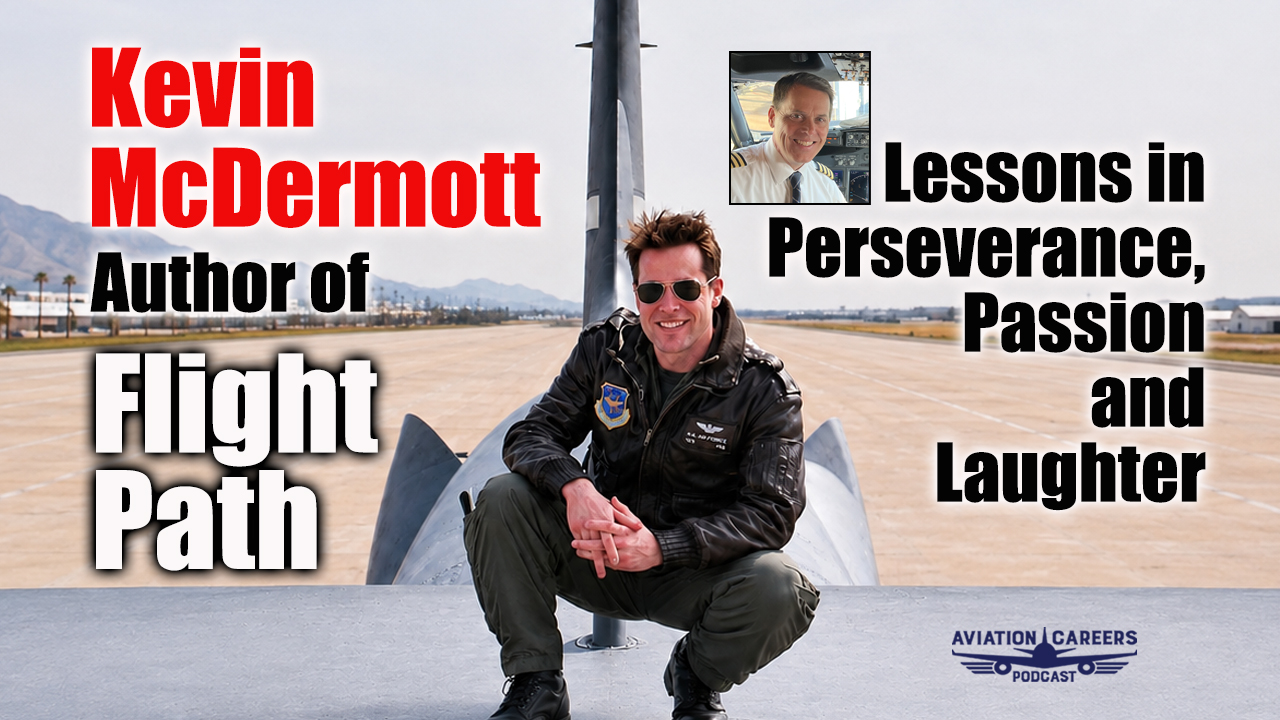
Today we have a special guest Kevin McDermott Author of Flight Path: An Irreverent Aviation Tale. Kevin encourages pilots and non-pilots alike to persevere through setbacks, appreciate the mentors who shape our lives, and never lose their sense of humor along the way.
=========================================
When most people hear the phrase “remote career,” they picture someone working from a laptop at home, sitting in a coffee shop, or answering emails from a beach. But there is another kind of remote career. A career where your office might be 35,000 feet above the ground. A career where you can live hundreds—or even thosands—of miles away from the place where you actually work. A career that may allow you to arrange your schedule so you are home for extended stretches of time. That career is being a professional pilot. Being a pilot may not be remote work in the traditional sense, but it might be one of the ultimate remote careers. Today, we are going to discuss why.
YOUR HOME AND YOUR JOB DO NOT HAVE TO BE IN THE SAME CITY
PILOTS WORK IN BLOCKS OF TIME
YOUR OFFICE TRAVELS WITH YOU
YOU MAY BE ABLE TO LIVE WHERE THE COST OF LIVING IS LOWER
SENIORITY CREATES FLEXIBILITY
That is why choosing the right company is about more than starting pay.
DIFFERENT PILOT CAREERS OFFER DIFFERENT TYPES OF FREEDOM
THE REALITY OF COMMUTING
PILOTING CAN CREATE TIME FREEDOM
DESIGN YOUR CAREER AROUND YOUR LIFE
Do you currently commute to your pilot job?
Or would you prefer to live in the city where you are based?
Share your experience in the comments.
Your perspective may help another pilot make an important career decision.
If you found this video helpful, please give it a thumbs up, subscribe to the channel, and share it with someone considering a career in aviation.
Remember, your aviation career is a journey.
Take one step today toward your aviation career goal.
These are words every airline pilot hopes they will never hear. Today’s guest has experienced all of them—and still managed to rebuild, reinvent himself, and come out on top.
Paul Horsley is a retired airline pilot and the author of “Why the Rich Don’t Die Broke”. Paul, welcome to the show.