All posts by CarlValeri

Host of Aviation Careers Podcast. For more about me go to AviationCareersPodcast/About.

ACP142 Should You Sign A Long Term Contract As A Flight Instructor and More Questions Answered

Welcome to the Inspirational, Informational, and Transparent Aviation Careers Podcast. Today Robert Guyer Joins me to Answer your questions, including one about whether you should sign a long term contract as a flight instructor.

Announcements:

If you are looking for coaching, the schedule has been getting really tight. If you are having trouble getting booked in the schedule please send an email to feedback@aviationcareerspodcast.com and we will try to get you fit in. I’ve been moving, as well as flying some red eye flights so it has been tough but I may be able to get you in while I am on the road.


Carl and Robert discuss If You Should You Sign A Long Term Contract As A Flight Instructor and More:

  • How the Cape Air to JetBlue program works
  • Should a CFI sign a long-term (1 year) contract, which could prevent them from moving on in their career?
  • Is an offer from a regional or major airline likely or a long shot when I barely meet the minimums?
  • Training on the weekends vs. training full time and part 61 vs. part 141
  • Can I get a first class medical when I am on a medication for anxiety?
  • Went through Civil Air Patrol for flight training, would love to share my experience.
  • 46 years old, Assistant Principal at a High School, never thought I could be a pilot, but now working towards a career change. What freelance flying jobs can I find to supplement CFI income? If pursuing a corporate aviation career, is it realistic to get hired at my age? Would a Masters in Education be valuable to the major airlines as a degree?
  • Robert has flown with a Captain that did some “high altitude gliding.”

Links Mentioned in this Episode:

Photo Credit: Jeff Kennon

ACP141 The Podcast Is Moving To Lakeland, Florida

The Podcast Is Moving To Lakeland, Florida! When choosing a career and where you want to live there are many factors you must consider. Some want to be close to work, others wish to be near their recreational activities, and others choose a town with good schools. One of the greatest benefits of being a crew member with an airline is your ability to live anywhere in the world. So why did we choose Lakeland, FL? We will discuss that below.

Announcements:

Coaching : Career Change Plan Of Action, Interview Prep, Resume and Cover Letter review.

Listener Questions and Feedback:

The school financing debacle is happening again.

Don’t Pay Any Flight School More Than $2500 In Advance: The Censored Information The Bad Guys Don’t Want You To Know

Better Business Bureau Online Complaint form

Federal Trade Commission Complaint Assistant

How To File A Consumer Complaint

Color Blindness

Why We Are Moving to Lakeland:

  • Location close to base.
  • Driving distance to two pilot bases.
  • Between two cities my company serves making it easy to commute to any base in the system.
  • Many aviation venues and air shows within 100 miles of Lakeland.
  • More opportunities to meet you the listener.
  • Close to Polk State College.
  • Sun N Fun Campus
  • Opportunity for me to fly more recreationally.
  • Compromise on living on an airport now we are living near one.

Feedback on Meetup and social events.

Map and Directions To Lakeland Airport

Pick Of the Week:

Officials cut ribbon on new NOAA Aircraft Operations Center

ACP140 Accelerated Flight Schools with Dan Freeman

Welcome to the inspirational, informational, and transparent aviation careers podcast. Today I have with me a special guest, Dan Freeman of the Accelerated Flight School Podcast.  Dan has a wonderful podcast sharing his journey towards the airlines by using an accelerated training program. Dan is a flight attendant with a major airline and is a mid-life career changer.

Career

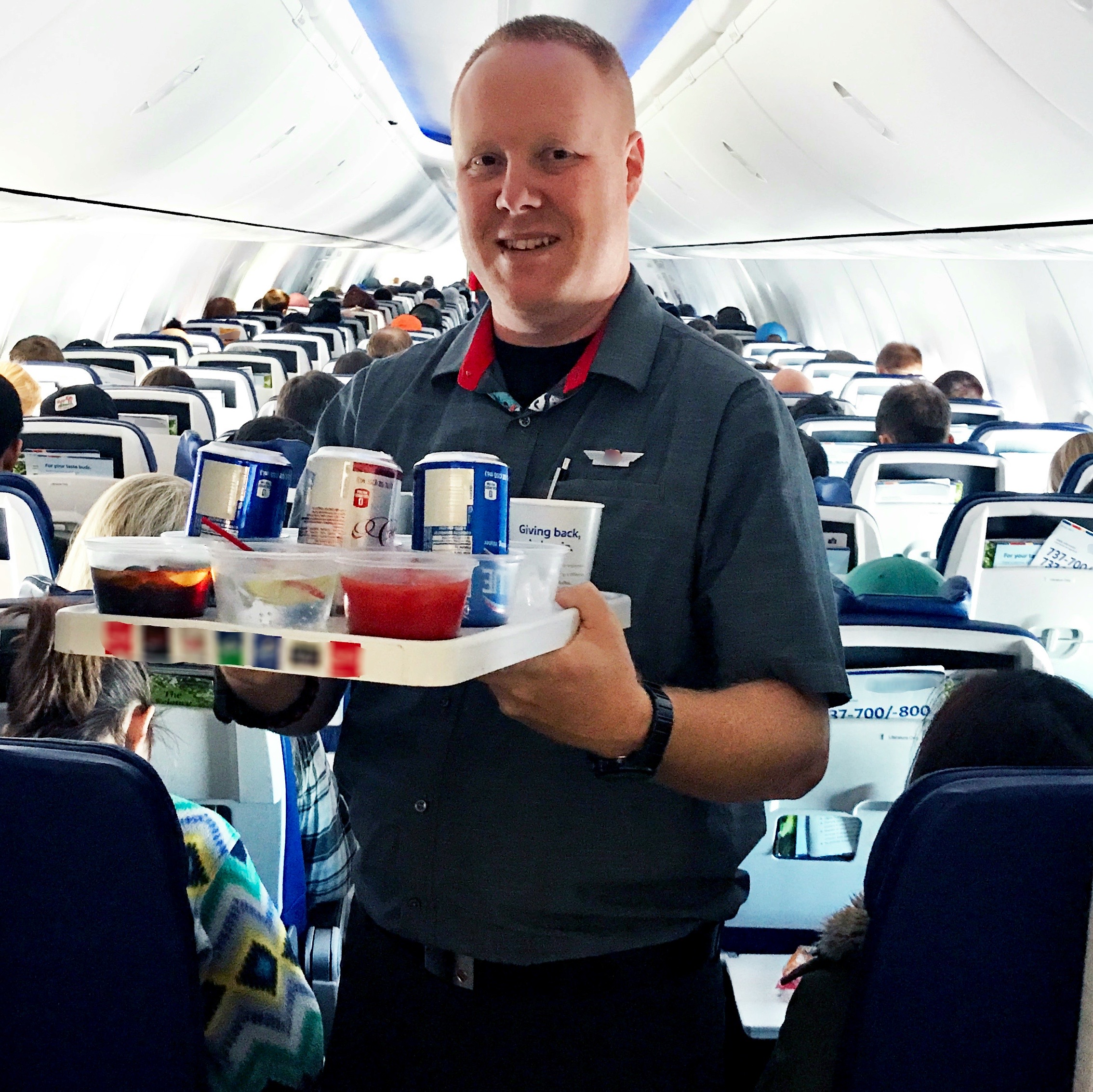
Dan obtained his license at 17 and attended the Reno Air Races with his Dad. He dreamed of being a pilot but life got in the way, so he ended up being a flight attendant. At 35, he found out from a First Officer that he could still be a pilot, and got into an accelerated training program.

Dan also still loves being a Flight Attendant, sometimes using his flight benefits to travel around the world and interact with the people from those other parts of the world.

Carl and Dan Discuss Accelerated Flight Schools

  • Switching to Pilot from Flight Attendant can mean a pay cut, but it depends on where you are in your career.
  • Dan’s Accelerated Flight School Podcast is a way for Dan to “give back” to the community by sharing his experiences with others interested in taking this journey.
  • Specifically, in Episode 2 Dan discusses the options for getting training such as going to the local FBO, an accelerated program, or a university.
  • He describes his program, which currently is a 9 month “zero to hero” no licenses to CFI.

Connect with Dan:

Twitter: @gingerdanpilot
Facebook: Ginger Dan Pilot
Podcast: Accelerated Flight School Podcast

ACP139 What Is An Aircraft Dispatcher? with Michael Karrels

Did you know that an aircraft dispatcher shares fifty percent of the operational control of a flight with a captain? A career as an aircraft dispatcher can be both rewarding and is not very well known by the traveling public. Today I have with me Mike Karrels who will help us understand the role of a dispatcher and discuss the rewarding and lucrative career of an airline dispatcher.

Announcements:

Michael and I Discuss Being an Aircraft Dispatcher:

  • A Dispatcher:
    • Plans all of the flights for an airline and creates a document that tells the flight crew the route of flight, the fuel required and the weather and turbulence that they can expect for the flight.
    • Flight crew’s first point of contact if there are any problems.
    • Communicate with the pilots while the flight is en-route updating them if any of the conditions have changed.
    • Shares 50 percent of the operational control with the captain of the flight.
  • Pay And Benefits.
  • Licensing and Certification
  • From desktop to flight deck.
  • http://pafca-ual.org/dispatch/
  • MEL
  • NOTAM
  • ACARS

Pick Of the Week:

Flying in Life: Mike’s podcast about being a dispatcher

Here are some Links to Video’s and articles of different operation centers – Some are a bit like Ad’s:

United Airlines:

Touring the United Airlines Network Operation Center in Chicago

United launches new Network Operations Center

Delta:

This one room in Atlanta acts as a mission control for all of Delta’s planes

This is our video for dispatchers and explains the job

Others:

Southwest NOC

Jet Blue

ACP138 Strategies For Pilots To Build Significant Wealth

In This episode we talk with co-host and author of Million-Air, Strategies For Pilots To Build Significant Wealth. In his book, you will learn tested and proven strategies to build significant wealth and manages the unique risks you face as a professional pilot. Any truly helps you create a “flight plan” for you financial goals.

Announcements:

New Career Coaching Service “the Valeri Aviation guaranteed interview prep”. We guarantee you will make it to the next phase or obtain a conditional offer depending on the airline.The Cost is $500 for a major airline and $250 for a regional. Certain restrictions apply including but not limited to your passing the background check.

Andy Garrison Interview:

  • Why this book?
  • Why you need to become a millionaire?
  • Risks unique to pilots.
  • Planning for Your future.
  • You are a Business, Act Like One.

Pick Of the Week:

Million-Air, Strategies For Pilots To Build Significant Wealth, By Andy Garrison.

https://www.aviationcareerspodcast.com/MillionAir

ACP137 From Flight Attendant To Airline Pilot : A Pilot’s Journey

At least once a week I am asked by a flight attendant how they can become an airline pilot. To help understand the journey from Flight Attendant to Airline Pilot I have joining me Jim, a flight attendant with a legacy airline. Jim’s journey is unique and exciting. We also discuss the qualifications and lifestyle of a flight attendant.

Announcements:

NAFI & King Schools Scholarship for certified Flight professionals

We Discuss:

  • What it is like to be a flight attendant for a legacy carrier.
  • Qualifications to be a flight attendant.
  • Flight Attendant Pay and benefits.
  • As Per the BLS Median Pay was $44,860 in May 2015
  • Bureau of Labor Statistics Flight Attendant Pay And Benefits
  • Journey to the cockpit.
  • Why transition to pilot now?
  • How vision standards have changed to allow many into the cockpit.
  • Accelerated flight training benefits and challenges.
  • Per BLS median pay for airline and commercial pilots was $102,520 in May 2015.
  • Timing starting flight school if intending to continue working as flight attendant.
  • What to look for in a flight school.
  • Will I have to go to a regional?
  • If not, how will I accumulate the hours needed?
  • Who do I want to work for and why?

ACP136 Overcome Challenges in Your Life and Career with Janine Shepherd

Today I have a special guest who has overcome challenges both physical and financial in her life. Janine Shepherd is the author of Defiant : A Broken Body Is Not A Broken Person. Janine was a lifelong athlete, who trained to be part of the Australian Olympic Ski Team in Calgary in 1998. She was recently chosen for Maria Shriver’s Architect of the Week.

During a training bike ride from Sydney to the Blue Mountains she was hit by a truck and nearly killed. She became a paraplegic who learned to let go of the trajectory her life was on, and embraced a new course learning to fly. She became a Private Pilot, Flight Instructor, and is now an Aerobatic Pilot. She is also a university graduate, mother of 3, best selling author, and a speaker.

Announcements:

This episode is sponsored by the Aviation Careers Podcast Coaching Services Program. Whether you are looking to prepare for an airline interview as a pilot, or simply apply for your first job after college, we can help you with figuring out your next steps, prepare for the interview, and how to overcome any challenges you may be facing.

Janine and I discuss:

  • You never know what is next in your life.
  • Never give up.
  • Overcoming fear in life.
  • Taking a leap in your career.
  • Women in Aviation.

Pick Of the Week:

Defiant : A Broken Body Is Not A Broken Person

http://mariashriver.com/blog/2017/04/architect-of-change-of-the-week-janine-shepherd/

Janine’s Website

ACP135 VA Benefits Clarified and Questions Answered With Eric Crump

In this episode we answer your questions. Joining me today is Eric Crump, Aerospace Director of Polk State College and all round good guy. Welcome to the show Eric.

Announcements:

Need Money for flight training or education? Don’t forget to purchase the Aerospace Scholarships guide 2017 is available on Amazon and in Itunes.

Eric announced that one of his students Dylan became a CFI. Dylan is a flight team member and one of Carl mentees.

Listener Questions and Feedback:

Carl and Eric start with an explanation of how VA benefits can be used for flight instruction, and referenced a long and detailed explanation of the benefits. Eric gave a great summary of the rules. Here is the complete e-mail from a listener:

Thank you for your superb podcast! I can’t count how many of my questions were answered just by listening to your shows. I appreciate the quality, depth, heart & humor that you, your co-hosts & guests put into it. Its truly a treasure. And not just for me, but also for my students. I don’t listen just for my own sake, but also so I can better answer my students’ questions about career issues. As a CFI these questions come up frequently, so your message is reaching them too!

Speaking of students, I saw your post saying you’d like to hear from listeners who have experiences as veterans using benefits to further an aviation career. I’m happy to report I utilized GI Bill benefits to culminate with a full-time government piloting career w/ excellent pay, benefits, & job satisfaction–can’t beat the view from the “office” (the cockpit)! I served as an Air Force officer in Afghanistan among other places.

My career field in the Air Force is very high-demand, so there was no opportunity for me to transfer to become a pilot in the Air Force. After realizing this and doing some soul-searching I decided to leave active duty and go into the Reserves so I could attend civilian flight training to become a professional pilot.

I was already a private pilot and had a bachelor’s degree, but I still needed to get advanced flight training from Instrument on. I decided to go to Western Michigan University’s College of Aviation for my flight training since they had an excellent program & reputation for flight training and also since my wife could go back to school in Music which is another strong program at Western Michigan (WMU).

My plan was to use GI Bill funding & possibly some student loans to help pay for my flight training. In addition to the quality flight training at WMU, I also chose to go to flight school there because as a university program it is categorized as an Institution of Higher Learning (IHL) where the GI Bill and other financial aid options can be more fully leveraged as opposed to a non-college (non-IHL) flight school. It turns out these were all great decisions.

After leaving active duty my wife & I packed up our moving truck and drove off into the dark on our road trip to Michigan from across the country. I say it was a drive into the dark because we had no idea where we would work, I still had no confirmation of being hired into a Reserve unit, and we didn’t know exactly how we would pay for all of this going back to school business (especially the flying).

However, we felt like it was the right thing to do after considerable thought, soul searching, discussions and prayers…so off we went! We felt like we really needed to accomplish our dreams while we had the chance because we knew eventually it might get tougher once we have kids and who knows if we’d ever have the opportunity again.

It only took a matter of days after arriving in Michigan before I started my Cirrus transition course so I could begin Instrument training at WMU. Thankfully there were some really helpful people at WMU that knew how to help me navigate all the technicalities with the GI Bill funding and they got me set up for success. Because I was attending an Institution of Higher Learning (an accredited university flight program w/ VA-approved flight training), almost all of my Part 141 flight lab costs were covered. Plus my tuition for ground and other university classes were also covered… classes like Instrument & Commercial ground school, Aviation Weather, etc. I actually did my commercial training in a multi-engine aircraft (the Seminole) and added the single-engine rating afterwards.

The benefit of doing it that way was I wound up w/ more MEL time after finishing the Commercial Pilot training which of course is what many employers want to see. Occasionally there were things like study materials, written tests, the Cirrus transition course, and flight exams I had to pay for out-of-pocket, but basically all of my Part 141 training to include Instrument, Commercial MEL, Commercial SEL add-on, and the university classes were all covered. The colleges calculate cost estimates for completing flight labs and run those figures through the VA for approval, so the amount the VA covers might not be the whole amount depending on how an individual student progresses, but it certainly covered most of it in my experience.

I absolutely loved being a flight student at Western Michigan. The Cirrus aircraft were really neat and slick airplanes to fly with glass cockpit avionics. The big wrap-around screen Cirrus flight simulators were especially cool for the Instrument training (parachute deployment practice and all!) and I had great instructors all around. Can’t say enough good about the program there, including how helpful their staff were for managing the GI Bill funding.

When I decided to become a CFI I had to switch to do CFI training at a different university because WMU’s CFI course was to yet approved for Part 141 / VA funding at the time, but it looks like WMU does have a VA-approved program for CFI training now.

Keep in mind that as this is all happening I was also working on a Master’s degree, I became a father, we bought a house and flipped it, and I got sent to Afghanistan on a deployment, all the while working at least 1/2 time for the Air Force. So it took me a while , approximately 5 years to chip away at the flight training, but eventually I got that CFI while I was working a full-time job as an Air Force civilian employee.

With the CFI in hand I quickly realized I had an opportunity to start flying for a living, so I took yet another step into the dark. I left my well-paying Air Force job to go flight instruct at a great FBO. It was a massive pay cut but a better office; a cockpit! I loved teaching and flying every day and seeing my students take flight while I was learning so much from the other instructors I worked with.

While I was flight instructing I was able to use GI Bill again to upgrade to CFII under a VA-approved 141 program. This time it was using GI Bill for flight training in a vocational flight school, not an Institution of Higher Learning. That’s an important distinction to make. Although almost all my costs for the CFII were covered by VA, the cost to me as far as what was being taken out of my benefits was basically more expensive to me.

Here’s why: Veterans under the Post-9/11 GI Bill are eligible for up to 36 mo’s of benefits. If I were to use benefits at an IHL for one semester, the VA covers my costs for that semester and then says, ok, we paid for your school that semester, which is about 4 months long, so now you have 4 months of benefits that you used, so now you have 4 months less time available to use your GI Bill benefits. So if you started at 36 mo’s, now you have 32 mo’s remaining.

But if you do your training vocationally, not at an IHL, then the calculations are different. In this case, VA says, ok, for *vocational* flight training we will approve up to (estimate) about $10,000 a year and no more than that.

So, let’s say your CFII costs about $5,000. Well that means you spent half of what we would approve for the year, so we’re going to take 6 months of benefits (half a year) from your total benefits available. So if you started with 36 mo’s, now you only have 30 mo’s remaining. So if you think about it, the vocational training benefits are helpful, but compared to what I was able to get at an IHL, if you do the math, vocational flight training is a much more “expensive” cost to my GI Bill benefits.

Plus, and this is a big plus, if you are at an IHL and are enrolled full-time, you are also eligible for a pretty significant housing allowance. So what I have found is the secret to maximizing Post 9/11 GI Bill benefits is to do the training at an institution of higher learning (side benefit- you get a degree & reduced ATP min’s out of it too), and do a ton of training in very condensed periods of time. By condensing my flight training in the summer semesters when the weather was more favorable for flying and when the semesters are shorter I really got a lot of bang for the buck.

In fact, by condensing I had enough time in my GI Bill benefits leftover that I was able to fund almost all of my Masters degree through the remaining GI Bill benefits.

The key is to condense the training. Of course doing it that way means it’s kind of like drinking from a fire hose, and I had to throttle back on my professional work during the cram periods, but in the end it paid off because I was able to accomplish both my aviation program and graduate school goals without having to pay much out of pocket.

Keep in mind I am 100% eligible, so other categories for VA funding prorated based on an individual’s type and length of service in the military. And then there is the new stipulation that IHLs have to own & operate their own fleet and can’t contract out in order for VA to fund it.

I should also mention that other veterans out there might want to consider how being in the Reserves might be able to help you cope with doing a career change and getting through school like I did. I found the Reserves to be a perfect means for making it through flight school and grad school while still being able to provide for a house because the pay & benefits are pretty good for the limited minimum amount of time commitment it entails, and the schedule can be really flexible and complementary to a school schedule if you are in the right type of unit.

In my case I was basically able to schedule my own work around classes, and after I got my Instrument and Commercial training done I started working in the summers full-time on Active Duty orders and that income went a long way towards carrying me through the school year. Plus it is a good way to stay involved in serving the country and having the kind of opportunities a lot of us were attracted to when we first joined the military. A side bonus is health care. When you’re in full-time flight training or school, good health care can be hard to get, especially without paying much.

Two of our children were born while we were covered under Tricare Reserve Select (TRS) and the whole family’s health insurance was covered for only about $200 a month. Reservists are typically eligible for TRS as long as they aren’t on Active Duty or are enrolled in Federal Employee Health Benefits (FEHB).

I’m not sure if the other services do it, but in the Air Force Reserve there also is a tuition assistance program that you can use separate from the GI Bill to cover tuition for classes. It comes with a 3-year Reserve service commitment, so I used some tuition assistance my first year after joining the Reserves which meant it didn’t really have an impact in extending my service since I already had a 4-yr commitment to the Reserves after separating from active duty. There also is a cap on the cost per credit hour but it definitely helped in my 1st year of grad school.

After flight instructing for about a year and half, I managed to get hired to fly for the government as a civilian GS employee and I’m totally having a blast! After all those years of work and school it is indescribably invigorating to realize I accomplished my dream of having a job where I get paid to fly airplanes!

It is even better since I’m flying for the government I also accomplished my goal of finding a piloting job where I can serve the country. Being a Government Service job it also has great pay, benefits, and job security, but the best part is I am home almost every night with the wife and kids. I’m almost at ATP hours now, so I’m weighing my options on moving to the airlines mostly owing to the “big shiny jet syndrome” you have spoken of, but the nice pay and schedule make it hard to leave my current.
I will probably be getting in touch with you later to get the coaching process started when the time is right, but for now I’m enjoying where I’m at and looking at how I got here with a grateful heart. I didn’t decide to serve the country so I could become rich, few people probably do, but I have to say the GI Bill has certainly made me feel richly blessed. I hope some of my info might pay it forward and help some other veterans out there who listen to your show. Thanks again for the tremendous podcast and all you do for our aviation community.

Listener Mail Continues:

  • An oil and gas industry worker asks about the best way for him to transition to aviation, listing his choices and current credentials.
  • Request for a recommendation for a book or books to transfer his international licenses to FAA (US) licenses. He also requested a flight school in the Tampa Bay, FL area to help get ready.
  • A reader asked for comments about ride sharing jet ventures and if it is a viable business model.
  • Comments about banner towing and it’s safety, which is dependent on the training you receive.

Pick Of the Week:

Gleim Red Books

Aviation Supplies and Academics

ACP134 Flow Through Agreements and Transitioning to a Piloting Career with Robert Guyer

Do you have questions about “In this episode we answer your questions with Robert Guyer, 737 Pilot and former recruiter and check airman at ExpressJet Airlines. Robert has been on this show a few times and has some valuable experiences to share

Announcements:

Coaching: Our coaching program is a great way to get help moving forward in your career. Whether you are needing advice on how to get started, figure out what your next move is, or anything else our coaching services can help you to move forward in your career.

Robert and I discuss:

  • Challenges in his career.
  • Dealing with Rejections.
  • Communting to Reserve

Listener Questions and Feedback:

  • Active duty Army Helicopter Instructor, asking how much of the promises of “flow through agreements” is true.
  • Recent Finance College Graduate aged 23, what are the options for switching to flying?

ACP133 Aviation Photography with David Rodwell

Aviation Photography is an exciting and evolving part of the Aviation Community. Welcome to the podcast where we inspire you to follow your dream and move forward towards your career goal each and every day. Today I have with me someone who is excited about helping others move towards a career in aviation through aerial photography. David Rodwell.

Announcements:

Coaching, Membership, and Online Courses are moving to a new platform.

David and I discuss Aviation Photography:

  • Using Aerial Photography to supplement your training costs.
  • How to get started in Aerial photography.
  • The shift from manned aircraft to UAS.
  • The ease of obtaining your UAS pilot certificate.
  • Where you can find more information.

Websites discussed in the show:

Aerial Photography Experts

Aerial Photography Academy

Aerial Photography Manual