ACP337 Should I Build Hours For The Regionals In My Own Airplane?

Welcome to the Inspirational, Informational, and Transparent Aviation Careers Podcast. In todays’ episode we answer the question: should you build hours for the regionals in a personal plane? But first a few emails from listeners and if you want to skip to a specific question we will have the times in the show notes.

If want to help others achieve their aviation goals please consider paying it forward by visiting https://www.aviationcareerspodcast.com/pay-it-forward/

For Free Scholarships guide visit: https://www.aviationcareerspodcast.com/free/

Correction From Last Video

Median Pay Starting at regional is 46

https://en.wikipedia.org/wiki/Median

Median Pay for commercial and airline pilots is $130,440 per year

https://www.bls.gov/ooh/transportation-and-material-moving/airline-and-commercial-pilots.htm

There was a comment concerning pay for air traffic controllers which is $130,420 per year. Although starting pay is much higher.

https://www.bls.gov/ooh/transportation-and-material-moving/air-traffic-controllers.htm

The point is to do something you enjoy, don’t do it solely for the money.

Listener Mail 1:

I am 58 years old and would like to know if there are scholarships available for someone like myself?

I am 58 years old and would like to know if there are scholarships available for someone like myself who was not able to complete his Private Pilot certificate several years ago due to an eye injury, and now wants to get back into flying?

I do fly a Kolb Firestar ultralight but would like to continue my education by getting my Sport Pilots license. I would continue to be private however, I don’t want to jump through all the hoops and barrels that I would need to go through to renew my medical due to the injury.
Thanks

Listener Mail 2:

Chile and the US have an agreement about visa H-1B1. Do you have some kind of information about some jobs with contracts that allowed me to work here in the US.

Main Topic:

Should I Build Hours In A Personal Plane For The Regionals?

Hello Carl,

I’m a CFI/II currently sitting at about 600 hours short of ATP minimums, due to my full-time job I can’t teach as much as I want to. The road to ATP is taking long, but I own a Cessna 150 which I’ve used to get all my ratings and build the majority of my time.

My question is would recruiters see it as an issue if I build the majority of the remaining time with a safety pilot flying around in my personal C-150 or do you think regionals wouldn’t pay much attention to this? What would they consider quality time if I choose this route?

Thanks.

=================================

If want to help others achieve their aviation goals please consider paying it forward by visiting https://www.aviationcareerspodcast.com/pay-it-forward/

For Free Scholarships guide visit: https://www.aviationcareerspodcast.com/free/

ACP336 Should I Become A Professional Pilot Even If I Am The Sole Earner In My Family?


Welcome to the Inspirational, Informational, and Transparent Aviation Careers Podcast. In today’s episode I answer the question if you should leave your job and become an airline pilot, even if you are the sole earner in the family.


If want to help others achieve their aviation goals please consider paying it forward by visiting https://www.aviationcareerspodcast.com/pay-it-forward/


For Free Scholarships guide visit: https://www.aviationcareerspodcast.com/free/


Listener Mail 1:

Hello Carl,

I’m a 45-year-old, married man with 2 children looking into changing my profession.

I have a passion for aviation, but as the sole income earner in my household, I need to first reconcile my financial reality with my goal of becoming a pilot.

The reason I’m writing you is to see if you could answer some questions that I have regarding becoming a professional pilot:

  •  Considering the current situation with COVID-19, after I get my CFI certificate, will I be able to find work to build my 1,500 hours needed towards my ATP?
  • How long should I expect it will take to build those 1,500 hours?
    • 5 hours a day 5 days a week = 25 hours a week.
    • 1500 hours / 25 hours per week = 60 weeks.
    • 15 months.
    • To be conservative give yourself 18 months or 1 ½ years.
  • During the time I will be teaching, how much should I expect to make a year?
    • $31.67 an hour based on ZipRecruiter.
  • Once I start on a regional or corporate job, how much should I expect to make a year?
  • Talk to a financial counselor and career coach.
  • Take One Step Today towards Your Career Goal


=================================


If want to help others achieve their aviation goals please consider paying it forward by visiting https://www.aviationcareerspodcast.com/pay-it-forward/

For Free Scholarships guide visit: https://www.aviationcareerspodcast.com/free/


ACP335 How To Keep The Aviation Passion Alive, Even With A Lack Of Funds

Welcome to the Inspirational, Informational, and Transparent Aviation Careers Podcast: How To Keep The Aviation Passion Alive, Even With A Lack Of Funds. In today’s episode, I answer listener mail and the question of how to keep the aviation passion alive even with a lack of funds.

Talking Points:

Listener Mail 1:

Hello, Carl I just wanted to thank you for your work and knowledge that you share on your podcast. They have helped me tremendously!!! I was struggling with the decision to pursue aviation because I am now 40 years old with a wife and 6 children, 3 of them Foster children. 

I started my private pilot license in June 2020 and had to take four months off from August to January. Now I am going for it full throttle! “No pun intended “ unfortunately/fortunately I live in the Pacific Northwest and the weather is less than ideal currently. I am at the cross country point in my training with 30 hrs Total Time. I’m trying not to get discouraged though as I know there will be a lot of ups and downs. 

Once again thank you for all that you do, it’s making a difference!

Listener Mail 2:

Hi Carl! 

Hope all is well. At the time of writing we are just starting to see a light at the end of the tunnel in career progression and hiring at the airlines. I have been fortunate enough to be at a good Regional  Airline that has done well during the pandemic and we have plans to resume hiring soon.

I’d be curious to hear your thoughts on what elements a good letter of recommendation should include. I’m excited to pay it forward and want to do my best to put the candidates I’m giving a reference to in a position to succeed. 

Thanks and keep up the great work. Good times are just around the corner!

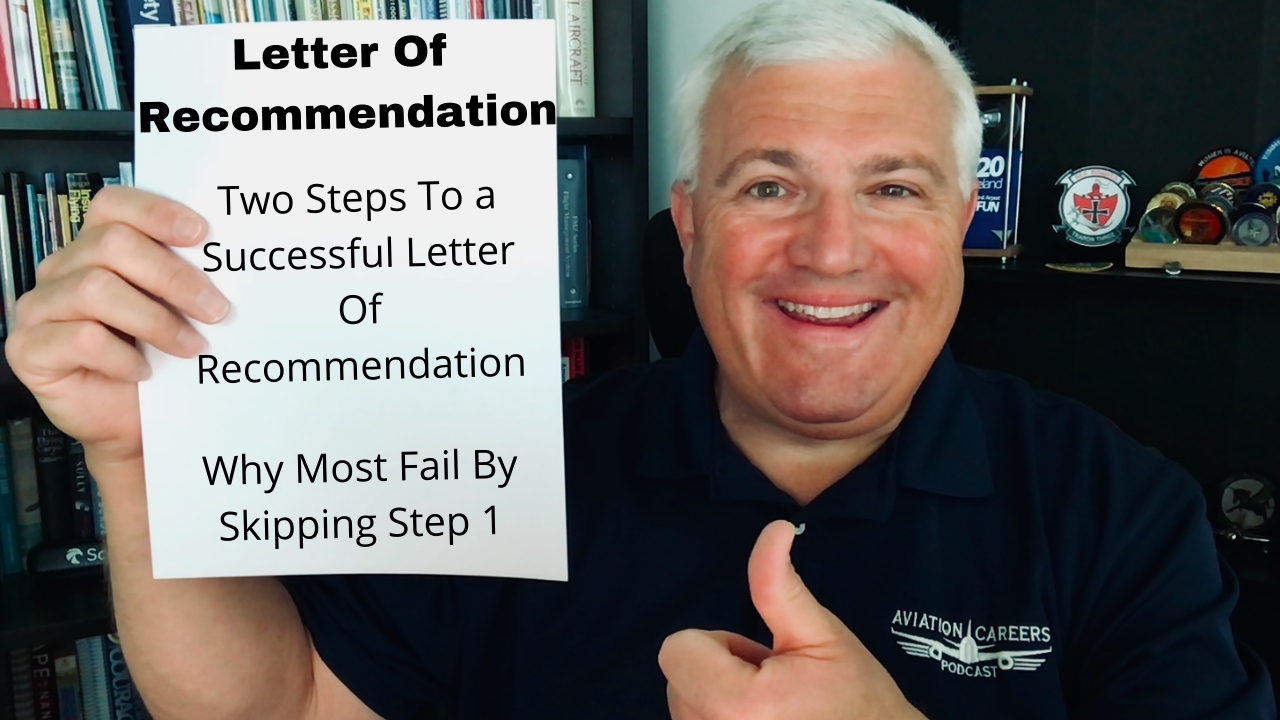
Visit : How to Write A Letter Of Recommendation On YouTube, and on this podcast at https://www.aviationcareerspodcast.com/acp331-two-steps-to-a-successful-letter-of-recommendation-and-why-most-fail-by-skipping-step-1/ 

Listener Mail 3:

Good Afternoon Carl,

How are you doing? I met with you back in October 2016 to get some career coaching and advice on making moves in my career. I was the engineer you were talking about at 43:25 on ACP 118 and wanted to give you an update on where I am today.

Since discussing with you back in October 2016, I ended up pursuing my second engineering job that I was hesitant about pursuing. While I was at the engineering job, I received my CFI certificate and began teaching on the weekends. 

I loved being an instructor so much that I quit my engineering job and pursued instructing full-time for about 2 years. Today I am 1.5 years into my first airline job at SkyWest Airlines flying the E175 based out of LAX. 

I just wanted to thank you tremendously for the life-changing career guidance that you provided me and keep providing to other people in need of guidance. I hope you are doing well and love continuing to listen to your amazing podcasts.

Take care.

Listener Mail 4:

Hello Mr. Valeri and Team,

I hope this e-mail finds everyone safe and in great health! 

I just watched your guest appearance on Nancy Bradshaw’s podcast. I’m a private pilot and US Air Force veteran looking to make a career in the aviation industry. At this stage, I’m interested in flying in business aviation.

Like many, having a family makes it challenging to pursue the ongoing training program, due to lack of funds. I’m making every effort to keep the passion alive! 

Any guidance would be greatly appreciated! 

There are many things you can do to keep the aviation passion alive while moving forward with your career, even if you lack funds.

  1. Read. FAA manuals are free online. Magazines are free at the library.
  2. YouTube – Watch our channel
  3. Podcasts – You’re listening and doing the right thing.
  4. Set up a financial goal and a budget right now and start moving forward.
  5. Revisit your goals continually
  6. Air shows and events such as Flight Sim Expo and Sun N Fun.
  7. Take one step every day. Something small or something large but do something every day to keep the passion alive.

============================

Links Mentioned In This Show:

How to Write A Letter Of Recommendation

https://www.aviationcareerspodcast.com/acp331-two-steps-to-a-successful-letter-of-recommendation-and-why-most-fail-by-skipping-step-1/

=================================

Sponsor: 

We liked to thank our Patreon Sponsors for providing free scholarships guides to our listeners. Visit  https://www.aviationcareerspodcast.com/patreon if you want to help someone achieve their career goals by providing a free scholarship guide.

To learn more about how you can get a free scholarship guide please visit https://www.aviationcareerspodcast.com/free/

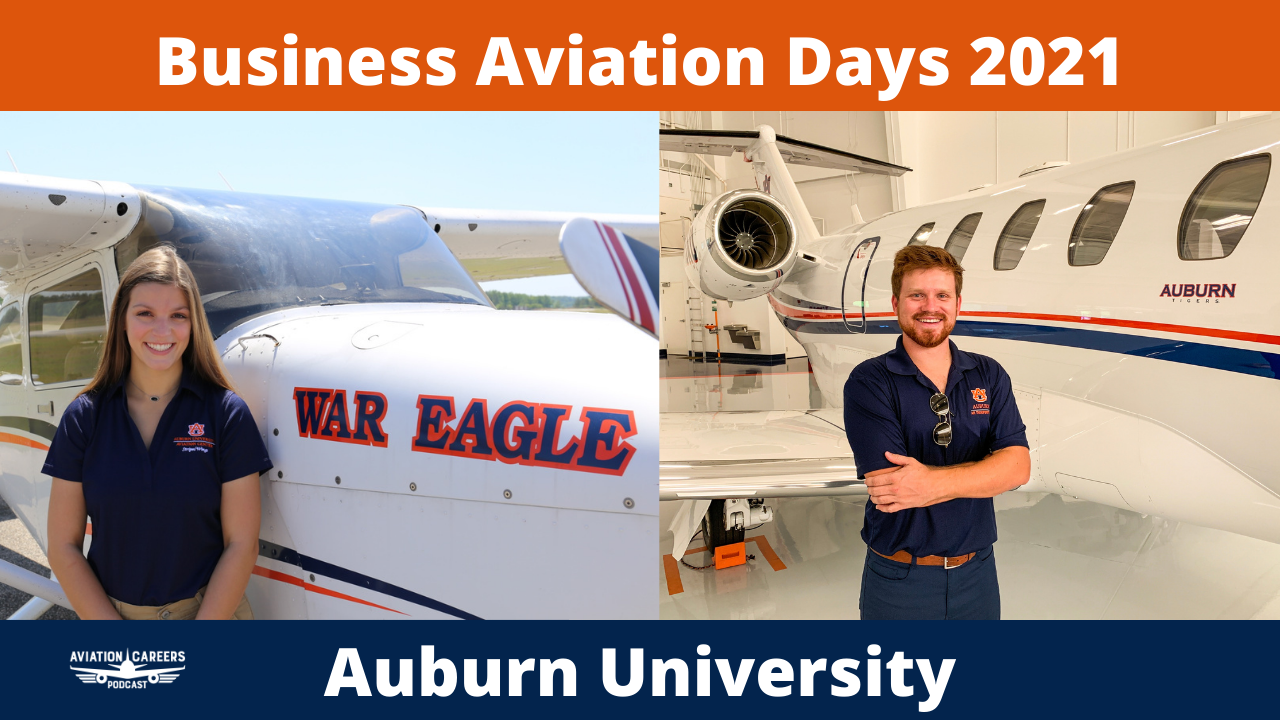
ACP334 Business Aviation Days at Auburn University

Welcome to the Inspirational, Informational, and Transparent Aviation Careers Podcast. In today’s episode, we discuss Business Aviation and how Auburn University is involved in outreach to help people understand careers in Business Aviation. Joining me today are Auburn alumni Will Leveille and Scottie Manzo.

Business Aviation Days

Talking Points:

The purpose and history of Business Aviation Days at Auburn.


Why people should consider careers in Business Aviation.

What type of jobs are available.

When and Where will the Business Aviation Days be held?

What can they expect at Auburn Business Aviation Days?

National Business Aviation Association and how they can help people progress in their careers.

Why Auburn if you are interested in a career in business aviation? 

What is next for Will and Scottie in their careers?

Links Mentioned In This Show:

https://www.aviationcareerspodcast.com/free/

https://cla.auburn.edu/aviation/ 

https://nbaa.org

https://jobs.nbaa.org

Sponsor: 

We’d like to thank our Patreon Sponsors for providing free scholarships guides to our listeners. Visit  https://www.aviationcareerspodcast.com/patreon if you want to help someone achieve their career goals by providing a free scholarship guide.

To learn more about how you can get a free scholarship guide please visit https://www.aviationcareerspodcast.com/free/

ACP333 If There Is A Pilot Shortage Why Can’t I Get Hired?

Pilot Shortage

Welcome to the Inspirational, Informational, and Transparent Aviation Careers Podcast. In today’s episode, we discuss why getting hired in this still has its challenges.

Sponsor: 

We liked to thank our Patreon Sponsors for providing free scholarships guides to our listeners. Visit  https://www.aviationcareerspodcast.com/patreon if you want to help someone achieve their career goals by providing a free scholarship guide.

To learn more about how you can get a free scholarship guide please visit https://www.aviationcareerspodcast.com/free/

Talking Points:

  • A listener asks why he can’t get hired while everyone is hiring.
  • More competition.
  • Less competitive application.
  • Lack of recent experience.
  • Many more applicants for the same number of jobs.
  • Lack of flight time compared to other pilots.
  • No degree.
  • Lack of Quality flight time.
  • Never stop flying during a downturn.
  • Try and build your resume.

Links Mentioned In This Show:

https://valeri-aviation.thinkific.com/courses/pilot-resume 

Watch On YouTube:


ACP332 Student Pilot Bill Of Rights with Gary Palmer

Student Bill Of Rights

Welcome to the Inspirational, Informational, and Transparent Aviation Careers Podcast. In today’s episode, Flight Instructor Gary Palmer joins me to discuss a proposed Student Bill Of Rights.

Talking Points:

Gary Palmer’s Aviation Journey.

Career progression.

Why a student bill of rights?

The history of the Student bill of rights.

His proposal for the future.

============================

Links Mentioned In This Show:

https://www.aviationcareerspodcast.com/free/

https://www.spartan.edu

YouTube – Catalina Island

Student Pilot Bill Of Rights

=================================

Sponsor: 

We would like to thank the sponsor of this podcast Spartan College of Aeronautics and Technology.

Ready for your aviation career to take off? 

Visit www.Spartan.edu to find how you can accelerate your career in aviation.

Established in 1928, Spartan College of Aeronautics and Technology is one of the nation’s first technical training schools for aviation and pilots. 

Spartan College has trained over 100,000 pilots during its over 90-year history!

With the purchase of 32 new Piper Archers, you will train using the newest technology in the industry.

To find out more visit www.Spartan.edu. 

Spartan College of Aeronautics and Technology will accelerate your aviation career and help you reach new heights!

Spartan is providing 50 free scholarships guides so please visit https://www.aviationcareerspodcast.com/free/

====================================

ACP331 Two Steps To a Successful Letter Of Recommendation and Why Most Fail By Skipping Step 1

Welcome to the Inspirational, Informational, and Transparent Aviation Careers Podcast. In today’s episode, we discuss the process of creating a successful letter of recommendation.

TimeLine:

00:00 Intro: The 2 parts to a successful Letter Of Recommendation

01:34 Step 1 : How To Ask For A Letter Of Recommendation and The Five W’s

06:50 Step 2 : How to Write A Letter Of Recommendation. 

11:55 Inspirational Message

============================

Sponsor: 

We would like to thank the sponsor of this podcast Spartan College of Aeronautics and Technology.

Ready for your aviation career to take off? 

Visit www.Spartan.edu to find how you can accelerate your career in aviation.

Established in 1928, Spartan College of Aeronautics and Technology is one of the nation’s first technical training schools for aviation and pilots. 

Spartan College has trained over 100,000 pilots during its over 90-year history!

With the purchase of 32 new Piper Archers, you will train using the newest technology in the industry.

To find out more visit www.Spartan.edu. 

Spartan College of Aeronautics and Technology will accelerate your aviation career and help you reach new heights!

Spartan is providing 50 free scholarships guides so please visit https://www.aviationcareerspodcast.com/free/

====================================

Links Mentioned In This Show:

https://www.aviationcareerspodcast.com/free/

https://www.spartan.edu

ACP330 Perseverance When Everyone Says No – Lessons From A Marine Pilot.

Welcome to the Inspirational, Informational, and Transparent Aviation Careers Podcast. In today’s episode, I read an inspiring story from a Marine Pilot who succeeded through perseverance even though he had many No’s in his career progression. 

Links Mentioned In This Show:

https://www.aviationcareerspodcast.com/free/

https://www.cnatra.navy.mil/tw5/vt3/ 

https://www.spartan.edu

TimeLine:

 Intro – I’m Back From A Medical Break

Listener Mail: Should I pay for the ATP-CTP?

Inspirational Story Intro

History of VT-3

Perseverance When Everyone Says No

Carl’s Inspirational Message

Talking Points:

Thank you for your patience while I made my way through this sickness. I am now fully recovered and have my vaccine.  We are back to a normal schedule.

First listener question before we hear our inspirational story.

===============================================

Hello Carl and team.

I have a quick question for the podcast.

I just hit 1500 hours TT and have enough cross-country time for a R-ATP (425). I know the regionals will generally do your ATP checkride as part of your initial training and type checkride. Before COVID, they were covering the ATP-CTP as well. My question is, given the environment, would it be worth spending the $5K on the ATP-CTP now or should I wait until hiring restarts to see if the regionals will continue to cover it?

I would like to do the ATP-CTP now and get the ATP written out of the way, but it’s a lot of money I don’t really want to spend right now if I don’t have to.

Thanks!

============================

Now on to our inspirational story but first we would like to thank the sponsor of this podcast Spartan College of Aeronautics and Technology.

Ready for your aviation career to take off? 

Visit www.Spartan.edu to find how you can accelerate your career in aviation.

Established in 1928, Spartan College of Aeronautics and Technology is one of the nation’s first technical training schools for aviation and pilots. 

Spartan College has trained over 100,000 pilots during its over 90-year history!

With the purchase of 32 new Piper Archers, you will train using the newest technology in the industry.

To find out more visit www.Spartan.edu. 

Spartan College of Aeronautics and Technology will accelerate your aviation career and help you reach new heights!

Spartan is providing 50 free scholarships guides so please visit https://www.aviationcareerspodcast.com/free/

====================================

Carl,

I’ve been listening to your podcast for a few years now, and I gotta say you have been very inspirational to me. I greatly appreciate what you do for all of us. I finish listening to your episodes and always accomplish something to move in the right direction.

 Thank you. 

I finally got around to emailing you because I was watching one of your YouTube episodes (great BTW, keep that up), and I saw a big VT-3 patch on the shelf behind you. I was just curious what connection you had to the Red Knights and if you were an instructor here at one time?

I’ll be retiring out of here in a couple of years and plan on starting a career in the airlines after this. I plan on reaching out for some career advice when the time comes, or at least a little closer.

======================

A short history of VT-3

Training Squadron Three (VT-3) was commissioned on May 1, 1960, at South Whiting Field. Its primary mission at the time was to instruct student Naval Aviators in radio instruments, air-to-air gunnery, and formation flying. Air-to-air gunnery was discontinued in January 1965 and familiarization and basic instrument training was added in its place. In 1973, VT-3 moved to its present location at North Whiting Field.

In 1980, VT-3 became one of the few commands selected to be alternately commanded by Navy and Marine Corps officers. The Red Knights were honored again in 1994 when they became the Navy’s only joint primary flight training squadron to include Air Force students and instructor pilots. Additionally, VT-3 alternated Navy and Air Force commanding officers from 1995 to 2014. Today, VT-3 continues its legacy of joint training with a ready-room of Navy, Marine Corps, Coast Guard, and Air Force instructor pilots.

https://www.cnatra.navy.mil/tw5/vt3/ 

==================================

I’ve heard a lot of inspirational stories on your show. I hope you have the time to hear mine.

I knew from a very young age that I wanted to be a pilot. As I remember back there were a few things that worked together to spark my passion. My dad was in the Air Force and worked on F-15’s. I was able to be around the aircraft regularly. We had a family friend who was an airline pilot and got me a discovery flight with the Young Eagles program. I know it seems trivial but as a kid I loved to build models of aircraft. My parents bought this paper airplane model kit (Whitewings), and I was so intrigued with how they flew and the aerodynamics behind it. But the pivotal moment was about 14. We were stationed at Nellis and the Thunderbirds used to practice north of Vegas all the time.  I would sit on the roof and watch. One day I told myself, “Yup, that’s what i’m going to do.” It took a tremendous amount of work as a teenager, but after being stationed back at Eglin, I mowed a lot of lawns and saved up the money to get my private license at the Eglin AFB Aero Club. 

I flew as much as a poor young adult could afford for the next couple years. Then life took a different direction. I got married, had a son right away at a very young age, and found myself struggling to provide; with nothing extra to spend on flying. After losing my last civilian job with a second son on the way, I went to a recruiter and enlisted in the Marine Corps. 

I spent the next 12 years as a Tanker. I had the most wonderful experiences, incredible deployments, and made lifelong friends. All the while I would take a college class here and there, and try to fly just enough to stay current with what I could afford. 

There is a program in the USMC called MECEP (Marine Enlisted Commissioning Education Program). It is a very competitive commissioning program that basically gives you orders, while remaining active duty and getting paid, to go to college, get your degree, and commission upon completion. A very sweet deal indeed. 

I was selected and attended Embry Riddle Aeronautical University in Daytona Beach FL. Majored in Aero Sci. And because I could use my GI Bill benefits, I went to the Multi-engine track and flew the DA-42 the whole time I was there to get my Commercial, ME, Inst. I was so happy to be doing what I loved and getting paid for it. While attending the school, I tried to get an aviation contract with the Marines. But I was 31 at the time, and the CG (Commanding General)  said no to my Age waiver. I was incredibly frustrated, but I did not give up. I asked again but again an answer of no. New CG, asked again, No. CG Came to the school so I was able to talk face to face, he said he would work with me. But it came back on paper, No. I was pretty frustrated. I was older because I had been a Marine not because I had been on the street the whole time. I ran a

n outstanding PFT (Physical Fitness Test), had a 4.0 GPA, was attending the perfect school for it, all 9’s on the ASTB (Aviation Selection Test Battery), was going to incur the same obligation as any other new Marine pilot, yet I was one year older than another student at the school who got the waiver and my answer was No. 

I went to The Basic School as a new officer on a ground contract. While under a different command I asked for the age waiver again and got a yes. I was ecstatic but now I had to compete for the one pilot slot for my class of 240. Only about 25 guys were gunning for it though. I worked my butt off and in the end, the pilot slot was mine. I was over the moon. 

You’re probably familiar with what happens next API (Aviation Preflight Indoctrination), then VT-6. I knew from the start that the C130 was where I wanted to be. I was very successful in primary, after all I had been studying for this my whole life. I was lucky enough to be selected for the almighty Herc, and I have had the most amazing career flying it. I fell in love with that plane. 

Stationed in Japan then San Diego, been around the globe numerous times, flown to the craziest locations you can think of, numerous deployments and detachments. I would drive to work and could not believe that they were paying me to do this. 

The mission set for this platform in the USMC is unique as well. To be able to fly a low level at night on the goggles under a threat to air deliver bundles of blood and supplies to troops at a FOB (Forward Operating Base), go refuel jets or helo’s, land in austere location somewhere, then a couple nights later be at some capital city in Europe for the trip home, doing it all with your close friends in a plane that is comfortable and a blast to fly! 

All good things come to an end and I knew that I would get orders somewhere, so I asked for orders to come back here to Whiting and instruct. So far I have greatly enjoyed it. I owe the two years for the PCS then I will be eligible to retire. I plan on flying for the airlines after. I’m looking forward to the next chapter, but certainly enjoying this one.

Once again, love your show and all the work you do advancing our community. Thank you for all you do. 

Look forward to hearing from you.

ACP329 If I have Covid-19 will it affect my Pilot Medical?

Medical

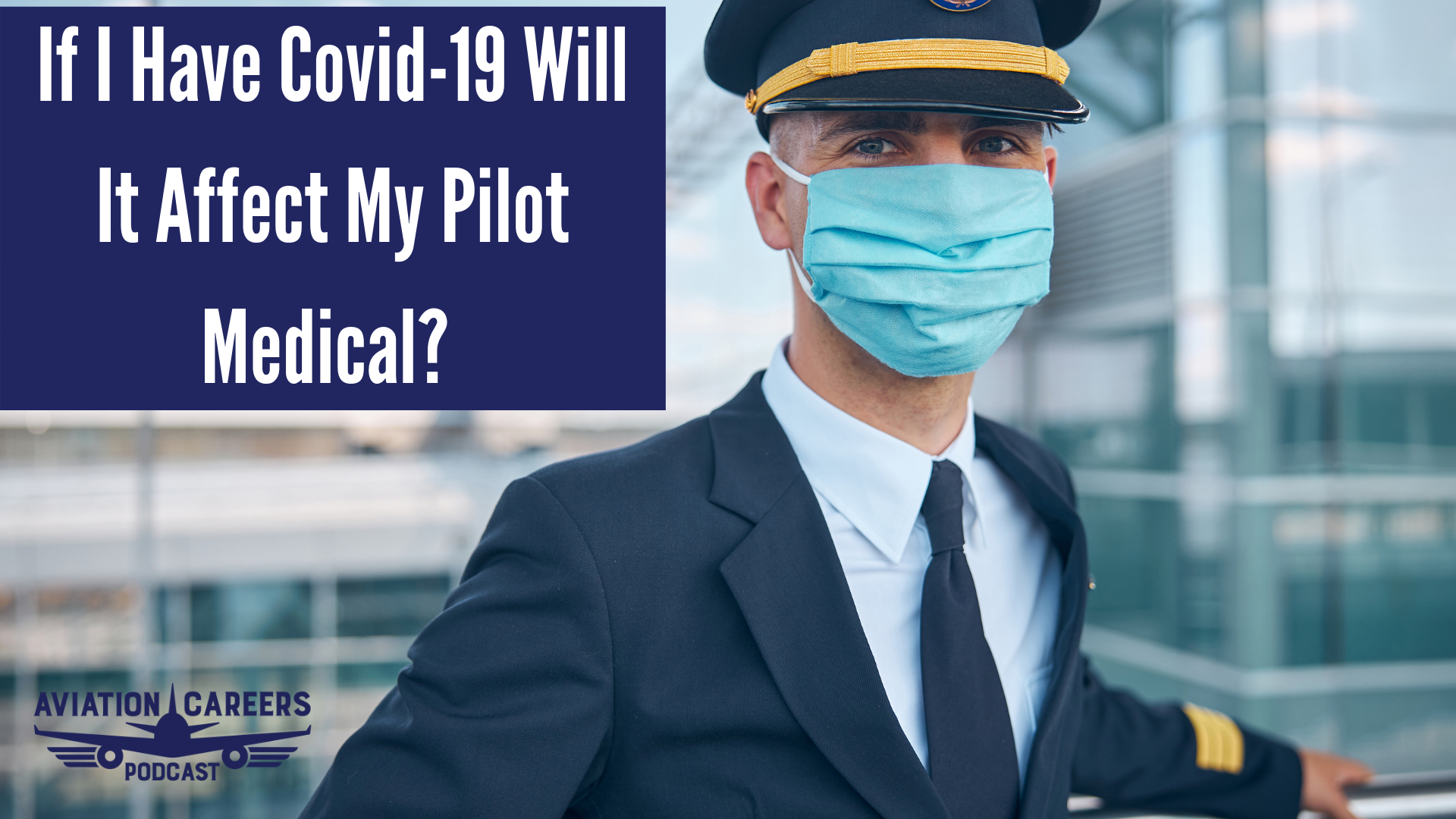
On March 31, 2021, the FAA updated the guidelines for Aviation Medical Examiners concerning applicants who have had Covid-19. There have been many questions surrounding the new guidelines and in this video, we will discuss how the new guidelines will affect pilots and obtain a medical.

https://www.faa.gov/about/office_org/headquarters_offices/avs/offices/aam/ame/guide/media/COVID-19DispositionTable.pdf

https://planeenglishsim.com  

App-based aviation radio simulator is an easy way to gain radio proficiency in both VFR and IFR. 

https://www.aviationcareerspodcast.com/free/

Joining me today is Chris Pezalla from the law offices of Robert Stumor at https://www.strumorlaw.com

What do I need to report to my AME?

What will the AME do if I have had COVID?

What happens if my medical application is deferred?

What happens if my application is denied?

What paperwork should I keep?

Wait 48 hours after the vaccine.

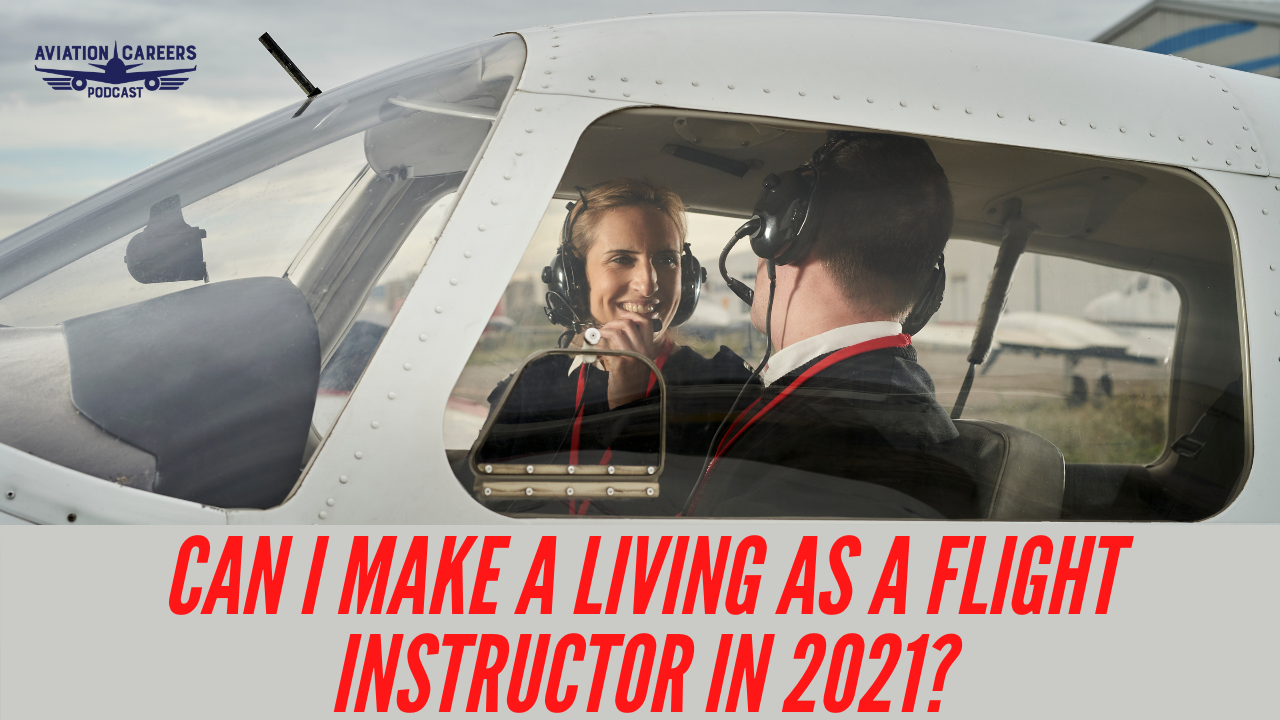
ACP328 Can I Make a Living As A Flight Instructor in 2021?

Flight Instructor

Welcome to the Inspirational, Informational, and Transparent Aviation Careers Podcast.  Today we answer the question Can I Make a Living As A Flight Instructor in 2021?

Thank you to our Patrons. http://AviationCareersPodcast.com/Patreon 

Thank you to our sponsors for giving away a free scholarships guide. To get a free guide with over 120 million in scholarships visit https://www.aviationcareerspodcast.com/free/ 

Watch The YouTube Version of This Podcast Can I Make A Living As A Flight Instructor – YouTube.

Sponsor:

Ready for your aviation career to take off? 

Visit www.Spartan.edu to find how you can accelerate your career in aviation.

Established in 1928, Spartan College of Aeronautics and Technology is one of the nation’s first technical training schools for aviation and pilots. 

Spartan College has trained over 100,000 pilots during its over 90-year history!

With the purchase of 32 new Piper Archers, you will train using the newest technology in the industry.

To find out more visit www.Spartan.edu

Spartan College of Aeronautics and Technology will accelerate your aviation career and help you reach new heights!

==============================================

Listener Mail:

Greetings! I got my CFI and CFII right before we moved to the DC area in 2019, hoping to start teaching. But childcare and other expenses made it unaffordable to teach and then COVID hit and the local schools don’t have the volume to support a full-time transition to CFI for me. I will get there.

Talking Points:

  • Can I Make a Living As A Flight Instructor in 2021?
  • Why jobs will increase for flight instructors in 2021.
    • Airlines are hiring again.
      • Why airlines are hiring even though they are not making money.
      • It is all about the block hours.
    • People are being called to start training for their Conditional Job Offers (CJO’s)
      • Listener mail from a coaching client: 
      • I just wanted to take a moment and thank you. Today I received a CJO from PSA, I wouldn’t have been in a position for that to happen if it wasn’t for your career coaching. 
      • I maintained my cadet status with Envoy all throughout last year even after I was laid off from a large flight school.
      • Envoy wasn’t hiring yet they worked out a deal for cadets based on seniority to interview with PSA. 
      • You told me to do whatever I could to maintain the cadet status and it paid off. Thank you again for the advice and all the great content you’re producing.
    • Travel is increasing.
    • Career seekers are realizing the best time to get into aviation is right now.
  • How To Make A Living As A Flight Instructor.
    • Certificates increase your audience.
      • Some schools won’t hire you unless you have your CFII.
    • Networking.
      • Make sure your LinkedIn Profile looks good.
      • Find a course or coach to help you build a profile.
    • Marketing.
      • Business Cards.
      • Attend Air Shows like Sun N Fun.
    • Student Retention.
      • The customer is #1.
    • Referrals.
    • Charge for all of your time while teaching.
      • Pay rates start pay around $25 and move up depending on the school.
      • Paid only when teaching.
      • Based on 5 hours a day, 5 days a week, 50 weeks a year of work: $31,250.
      • If you are able to teach 8 hours a day that equals $50,000.
      • Some hire paid instructors can make up to $90,000 but these are the top 10%.
      • Some schools you might only make $20,000 because they pay low and guaranteed many hours and don’t charge for ground instruction. 
      • Do your research.
    • Ground and Simulator training are very important aspects of teaching so get paid for pre-flight, post-flight, and sim training.
  • Suggested Reading:
    • The Savvy Flight Instructor: Secrets of the Successful CFI https://amzn.to/39XVYD2
    • The Flight Instructor’s Survival Guide: true, witty, insightful stories illustrating the fundamentals of instructing. https://amzn.to/3wSfbA6 
  • Take Action Now!

A Podcast about Achieving Your Aviation Career Goals