Category Archives: Pilot Shortage

ACP084 Pilots On Food Stamps with Ben Mandell

PilotsOfFoodStampsCoverWelcome to Episode 84. The goal of this podcast is to inform, entertain, and motivate you to achieve your career goal. We to bring you the viewpoint of all those involved with careers in aviation and aerospace.  Although we primarily focus on the positive aspects of a career in aviation and specifically as an airline pilot we also know that we must represent the challenges of choosing a career in aviation.

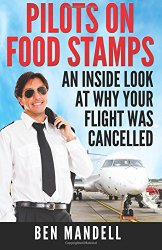
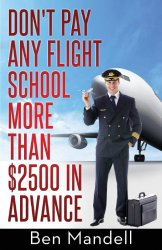
To help you understand some of the challenges concerning salaries in the piloting career I have with me Ben Mandell author of Don’t Pay Any Flight School More Than $2500 In Advance: The Censored Information The Bad Guys Don’t Want You To Know and Pilots on food stamps: An Inside Look At Why Your Flight Was Cancelled.

You can find his book by clicking here or going to AviationCareersPodcast.com/foodstamps

Ben and I discuss:

  • Why You should not Pay more than $2,500 in advance to a flight school.
  • Scholarships to watch out for.
  • Ways to save money on flight training.
  • Why Flights are being cancelled.
  • How pilots are paid.
  • How the shortage of pilots is affecting salaries.
  • How the shortage of pilots affects the Majors.
  • Upgrading and Pay.
  • What he feels is the solution.

Scholarship of the Week:

Buckingham Memorial Scholarship-Air Traffic Controller’s Association (ATCA)

Average Award for all ATCA scholarships $6454.54

The Buckingham Memorial Scholarships are awarded to children of Air Traffic Controller Specialists who are US Citizens and enrolled half- to full-time in a program leading to a bachelor’s degree or higher.

Links:

Bureau Of Labor Statistics Occupational Outlook Handbook – Airline and Commercial Pilots

Sun N Fun Radio on LiveATC.net

Alumni from these colleges (almost) always pay their debts

PilotsOfFoodStampsCoverDontPayMoreThan2500Cover

ACP075 – Questions from a College Grad, the CTP Requirement, Pilot Shortage, PRIA Requests, and More


CollegeFlying, pilot shortageThis week I have another great episode of listener email with my good friend, Flight Instructor, and Aerospace Director at Polk State College Eric Crump.

In this episode we answer questions related to:

  • Questions from a College Grad
  • The CTP Requirement
  • Pilot Shortage
  • PRIA Requests
  • Plus a few more

Links Mentioned in the Podcast:

Regional Airline Association Discusses The Pilot Shortage

AviationCareersPodcast.com/PilotShortage

US Immigration

Aerosim

ACP050 – The Truth About The Pilot Shortage


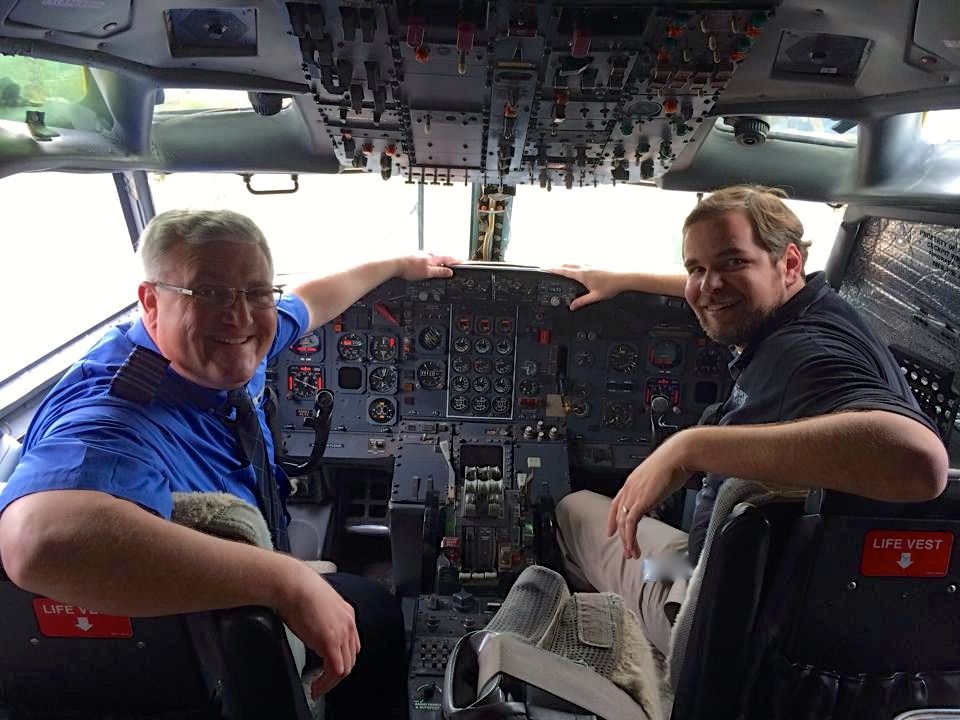
CarlAndEric727In this episode we answer one question: What is the truth about the pilot shortage?

We Discuss:

  • Taking politics out of the pilot shortage equation.
  • The truth about low starting wages in aviation and why I feel that will not change.
  • Changing the name of the pilot shortage to a “limited supply of qualified pilots”.
  • Career progression and expectations.
  • Why over selling the pilot shortage will create dissatisfied pilots.
  • How regulations will increase the requirements to fly for a Par 121
  • How new regulations have produced this shortage.
  • Why you should be careful who you listen to.
  • Why the pilot shortage should not be driving your decision to become a pilot.

Listener Mail:

I just wanted to try to be the first to congratulate you on a podcast mile stone of your 50th episode.

I also wanted to let you know that I have taken the first step in my aviation career. I have 850 TotalTime, 150 Multi-engine time, and 150 instrument.I have just taken a job flying aerial survey flying the 206. Not quite up there with you yet but I think I’m now on the right track. I feel that we are lot a like I’m 34 starting my aviation career and If I remember correctly you were in your early to mid thirty’s as well.

Thanks again for your podcast and for it keeping me motivated. I have listened to the podcast from episode one. So you can also take credit for my new job in a small part. Thanks again for all your hard work and you should start looking for me in a cockpit near you.

Links Mentioned In This Podcast:

Eric Crump on Twitter : @SeeEricGo

Polk State College

Current and Future Availability of Airline Pilots : US Government Accountability Office

As Communities Lose Air Service, Regional Airlines Decry Flight-Hour Threshold for Pilots

World needs pilots! Record growth leads to record need

How miserly airlines created their own pilot shortage

The new ATP certification test may cost up to $15,000. How will these high costs impact the pool of ATPs available to the airlines?

Union Says Lack Of Pay And Respect Leading To Pilot Shortage

ACP041 – “Don’t Let The Effort Keep You From Your Goal” Listener Mail With Eric Crump


RedBirdSimulator
Eric Crump the Aerospace Program Director at Polk State College  is an experienced pilot and has had years of experience helping people achieve success in their aviation career.

Eric and I discuss the following listener mail:

  • An aviation maintenance student wants to know job prospects for pilots and mechanics.
  • A 38 year with a family wants to know if age is a factor in choosing a career as a pilot and what his financing options are.
  • A private pilot wants to know if color blindness will keep him from becoming an airline pilot and what opportunities are available for those that are color blind.
  • Anissa has some advice for young pilots: “Don’t let the effort dissuade you from your goal!”
  • A  43 year old private pilot asks if a particular type of flying companies like to see in a pilot’s logbook?
  • Do I need to fund my own multi-engine rating to be considered for corporate or charter flying or are there opportunities for single engine pilots out there?
  • Will a  special issuance medical hurt my chances at an aviation career?
  • What is  your opinion on the future of civil aviation regarding pilotless aircraft. In the last half decade there have been huge advances in UAV technology and do you think that in say the next 30-50 years we will see the cockpit be reduced to 1 person just monitoring systems or possibly no-one?
  • Should take a semester off, and go to flight school and while instructing finish my associates online?  


Links Mentioned In This Podcast: 

Polk State Approved to Offer Bachelor’s Degree in Aerospace Sciences

Red Bird Flight Simulators

Boeing Pilot and Technician Outlook

Episode 006 – Career Prospects Are Good for Both A Pilots And Mechanics, A Panel Discussion with Guests From National Aviation Academy. 

AOPA Article: Answers for Pilots: Color vision

AOPA Article: Color Vision Restriction Removal

Air Surgeon’s Medical Bulletin January 2012

PlaneSense – fractional operator of single engine aircraft.

The UAV Digest
UAVDigest

The Golden Age of Unmanned Flight


ACP031 – Inspiring The Future Of Aviation – Interviews From Sun N Fun 2013 – Part 2

Welcome to Episode 31. Today’s episode is the second part of the inspirational aviation career interviews from Sun N Fun 2013.  Sun ’n Fun’s mission is to preserve and enhance  the future of flight through world-class events while inspiring and educating people of all ages. To learn more about Sun N Fun please listen to episode 30 and read the show notes. I think you will find that there is something for everyone who is interested in aviation at Sun N Fun year round.

Before we begin the interviews I want to encourage you to sign up for our e-mail updates. Many of you have asked if I could be available for career counseling. Of course if you have questions please feel free to go to Aviation Careers Podcast and click on the contact page to submit your questions, but I do understand you would like a more comprehensive conversation. I have spent many years consulting and would love to do one on one with each and every listener but I have limited time and my consulting rates may be a bit high especially for those who are just starting out in their career. Therefore,I came up with an idea that will help all of you and be of a high value.

I am still working on a few solutions along with some books and videos that will help you move towards your career goal. To keep up to date on the progress of these ideas and to receive other career updates please go to AviationCareersPodcast.com and sign up for e-mail updates in the right column.  I also will send announcements on occasion to include who is hiring, new programs available at flight schools, and new financing options to name a few. I encourage you to sign up for these e-mail updates because I am excited to be bringing you this valuable information in the future.

This episode contains inspiring interviews which all who are interested in a career in aviation will enjoy. In these interviews we discuss many aviation career fields including : commercial airline pilot, flight instructor, mechanic, engineer, and management.

Most of the volunteers at Sun N Fun Radio represent many podcasts. In my case I was representing The Stuck Mic AvCast:  an aviation podcast about learning to fly, living to fly, and loving to fly. I encourage you to  listen to at StuckMicAvCast.com.

Now with that said, lets get started listening to some of these informative and inspirational discussions.


  • Al Thompson – Central Florida Aviation Academy – Al discusses the purpose of the academy and how students can apply to the school. CFA is a wonderful opportunity for those young people interested in aviation.
  • Elaine Larsen The Embry Riddle University Jet Dragster. Elaine speaks about opportunities for engineering students to work on the jet engine and the dragster through the Eagle Hire Program
  • Jamil Larkin and The Embry Riddle Dream Launch Tour. Jamil discusses all of the career fields you can pursue at Embry Riddle.
  • Jessica MacClinchy, Admissions Representative, National Aviation Academy – Jessica speaks about the aircraft mechanic school, flight school, financial aid, and job opportunities for graduates.
  • Marisha Faulk – Driver of Embry-Riddle Jet Dragster – Marisha talks about driving the Jet Dragster, her degree experience at Embry-Riddle, flight instructing, and her future plans for flying. Marisha is truly an inspiration and is an example of someone who has overcome many challenges and succeeded in defining her career in aviation.
  • Julius with Aeronautical Systems Engineering at the National Aviation Academy Booth discusses the advantage of using simulators for your training.
  • Wayne with Elite Flight Simulation Solutions discusses the various flight simulators and the advantages of simulator training.
  • Paul Cassell – Fedex – Donates a 727 to Sun N Fun as a training device from the Central Florida Aviation Academy. Paul speaks about the outreach programs at Fedex and the importance of the many different careers in aviation. In addition Paul talks about the great need in all aviation career fields.
  • Tailwheels Etc. opened a new campus at Lakeland Linder Airport – John discusses their new flight school and what they have to offer for the student looking into a career in aviation. You can also learn how to fly a Stearman!  Kevin Chambers talks about the new program at Lakeland and the pending pilot shortage, and their new financing program. John discusses how Sallie Mae is back in the aviation educational financing business. John also talks about basic and advanced Aero Camp.
  • Jim Sherman talks about Plane Sense and the career opportunities.

As you can tell there are numerous passionate aviators at Sun N Fun who love to share their knowledge about aviation careers. If you are interested in a career in aviation, Sun N Fun is a great place to start. They have yearlong events and activities including summer camps, museum tours, an aviation high school, and so much more. For more information about Sun N Fun go to Sun-N-Fun.org.

Also if  you want to hear some amazing interviews and prerecorded shows you can listen to Sun N Fun radio at LiveAtc.net/snf or click on the link from my website.  Sun ’n Fun’s mission is to preserve and enhance  the future of flight through world-class events while inspiring and educating people of all ages and they truly achieve this goal. Click here to read How To Listen To Sun N Fun Radio 2013.

Thanks for listening to Aviation Careers Podcast. If you found this information useful please help support this website by visiting our sponsors listed on the website.  Also if you have any questions please click on the contact page where you can send an e-mail or leave a voicemail.

I hope you have enjoyed this podcast and gleaned valuable information from these interviews. To be successful in your career goal it takes persistence and perseverance. I have faith that you will achieve your career goal!

Talk to you next episode and Safe Flying!


ACP023 – Ten Reasons You Should NOT Become An Airline Pilot. Career Questions Answered with Tom Wachowski.

I spent a few days dropping my business cards off at flight schools and fixed base operators and I have come to a striking conclusion. Airports and flight schools can be the worst place to go if you want advice on becoming an airline pilot. Let me explain.

I like to leave cards at the airport so those who are interested in an aviation career will learn from the interviews and advice we provide on this show. After speaking with various people at numerous airports I received diverse reactions to my podcast.

When I speak with those who have been in the industry a long time I usually hear “I hope you are telling pilots to get out of aviation and do something that makes money”. When I speak with newer pilots excited about their new career I get a completely opposite reaction.

Most new pilots are “interested in hearing what we have to say on this podcast because they can’t wait to move their careers forward”. I can’t blame these “newbies” in the industry with all the negative feedback they get from their boss and the other older pilots working at the airport, I too would want to move on.

To help you better understand the challenges of being an airline pilot I wanted to give you some of the negatives I have heard from these people and other pilots I have spoken with over the past few decades. I have compiled a list of the top ten reasons you should not become an airline pilot so you can decide for yourself if this career is for you. If the top ten reasons are not negatives in your mind, then you will be a candidate for becoming an airline pilot.

Before we begin with our top ten list of reasons you should NOT become an airline pilot I want to ask you a favor. If you are an airline pilot and are listening to this podcast I invite you to write in with your own list of the top reasons you Should or Should NOT become an airline pilot. I will include these in an upcoming episode.

Today we are also going to spend most of the episode answering your aviation career questions sent via email. To help me with my list and to help give another perspective is Tom Wachowski. Tom was our guest in episode 14 and helped us understand the corporate pilot career.

Tom and I Discuss:

The Top Ten Reasons You Should NOT Become An Airline Pilot.

  1. You want to be home every night.
  2. You don’t like sleeping in hotel rooms.
  3. You needs lots of rest and can’t imagine working a 16 hour day.
  4. You want to a large income right away.
  5. You want to change jobs often.
  6. You want holidays off.
  7. You want to see your family every day.
  8. You don’t work well under pressure.
  9. You are afraid of being tested continually just to keep your job.
  10. You don’t like working with others in an enclosed environment.

Listener Mail:

From Ron:

I’ve only recently discovered your podcast, I appreciate the fresh perspective your episodes deliver!

For those who may not be able to fly with an airline, or may have a restriction on their medical for color vision deficiency with “not valid for night flying or by color signal control”, what other flying jobs are there aside from perhaps agricultural or patrol or daytime charters? How would one get their foot in the door with these or any other opportunities? How does one plug into the aviation “network” and begin making invaluable contacts?

From Shane:

I started listening to your podcast after your appearance on the airplane geeks podcast. At the time I was a student enrolled in the professional pilot program and working part time for the school as a veteran/financial aid adviser. Around this time our previous flight training provider lost their contract and a new flight school received the contract to conduct the flight training portion of the degree.

Word went out the new flight school was conducting interviews but since I had not yet received my CFI certification I initially thought that I shouldn’t waste my time interviewing. Luckily I remembered the advice I have heard repeatedly on your podcast that there is more to aviation careers than just flying so I went in with a resume and some optimism hoping for the best.

The following week I was contacted by the new flight school and they informed me they wanted me to be the customer service and admissions manager with a focus on student success. The best part was they agreed to let me start taking on students once I finished my flight instructor certificate!

I would never have thought to apply for this job if it were not for your advice and I could not be happier with the outcome. I love my new job and look forward to coming to work every day.

Thank you,
Shane

From James:

I just recently discovered your podcast and I really hope you continue to produce these in the future. I have been a helicopter pilot in the US Army for the past 16 years and I’m looking to start a 2nd career in the Airlines at the ripe old age of 38.

I started flying in 1990 when I was 15. At this time, a Cessna 152 was about $30/hour and the instructor was about $15/hour. At that point in time, one could pay for a private pilot certificate with about $2,000. Today the least expensive airplanes I see rent wet for about $100/hour and the CFI $50/hour. According the the US Inflation calculator, $30 in 1990 should be about $53 today, having had a rate of inflation change of 76% over the past 22 years. Even in 1990, the “old timers” were complaining about how much prices had risen since the late 70’s/early 80’s.

So why has the cost of flight training outpaced inflation by 200% over the past 20 years, and over 300% over the past 30 years?

It’s easy to blame the lawyers of the 1970’s and 1980’s for putting the Wichita companies out of the business of producing training aircraft. We still have no where near the economies of scale of production that we had during the “golden era” of the 60’s and 70’s.

I don’t think the LSA/sport pilot revolution (est. 2004) has lived up to the expectations we had anticipated 10 years ago. Is this simply because a plastic plane still needs to sell for $100k to turn a profit at the current (low) production levels?

One thing that has become more affordable over the years is the cost of the average airline ticket and the accessibility to the general public. When I took my first ride on an airplane in 1977 to visit Grandma, residing just 3 states away, it cost my parents $700 per person in 1977 dollars ($2,661 today) to board that United Airlines DC-10.

If the public thinks that we need to go back to the good old days when we were served steak and lobster with our own flight attendant to pamper us at the cost of 8 weeks worth of wages, this can still be done–it’s called first class.

And finally, to beat the dead horse of whether or not a pilot shortage really exists. Most of those in the industry who poo poo the idea of a real shortage based on the fact that during their tenure over the past 30 years, there just hasn’t been one. We have cried wolf too many times over the past 3 decades with nothing really materializing. What they need to keep in mind is that there are some major factors that have changed that didn’t occur during their time in the industry. Airline operators will no longer have the luxury of lowering the hiring minimums to 250 hours like they did in the late 1990’s. The cost of training and access to financial support to pay for training is at an all time low. Just look at the pilot population of 1980 (800,000 +) compared to today (500,000 +) and then further compare that to the number of passengers traveling and aircraft in service. This may just perhaps be the “real” shortage.

From Robert:

Hello, I found your podcast from hearing you on the Airplane Geeks Podcast. I am a former flight instructor and 135 charter pilot who has been out of the industry for the past two years but am trying to return to commercial flying. I have 1530 total time, 1197 multi engine, 960 turbojet multi and all the CFI ratings. However I have not flown in the past two years. I am hoping you might be able to advise me on how much recent experience I need to build to be a candidate for a regional airline.

Thanks,
Robert

From Terry:

Hello, My name is Terry Peterson I’m a Commercial Single Engine Land Instrument pilot with 500 TT and will have my CFI/II soon. I have been in sales for about 10 years and really enjoyed your podcast about aircraft sales. This is a field that has interested me for a while and I think with my skill set I would be a good fit in this field.

I’m working on my instructor certificates right now as kind of a student teacher. My instructor has paired me up with an instrument student, I write the lesson plans and my instructor then reviews them. I then teach the approved lesson to the student and when he is ready I sign him off for a stage check with the instructor to see how we are both doing.. If I could log dual given I would be able to log about 25 hours at this point. I like this approach because I found that I really enjoy teaching.

I have also decided to start my Aviation Maintenance Technician (AMT) training next year at my local college. I have been thinking about this for a year but after hearing your podcast about how it could make me more marketable as a pilot to have my AMT I have decided to move forward.

I have just recently found your podcast by way of the New pilot podblog when you were being interviewed by Rob. I have found your podcast informative and empowering . I believe I have been given inside information to make better educated decisions concerning my new career in aviation.

Thank you,

Terry

From Dan:

Hello Carl,

I have recently started listening to this podcast and am in the process of catching up from the beginning. Just have a few questions/comments from the episodes I have heard thus far.

In episode 15, you spoke with Betty of the Betty in the Sky with a Suitcase podcast. One point that came up was crash pads and the like, and it made me think of www.airbnb.com. Only very loosely related, as I understand this is much more like a hotel room than a long term money saving rental. However, I thought it might be worth mentioning for at least some of the corporate pilots out there, or anyone else staying overnight in a city which they don’t call home, who wants something a bit different than your usual hotel room. I’m sure the company takes care of the hotel rooms for you airline guys, so that is probably not really an issue. Perhaps this is more of a Pick of the Week for a Stuck Mic episode.

Stemming from the corporate pilot train of thought, I wanted to say that Tom Wachowski from episode 14 was by far my favourite thus far. Most likely due to the fact that he is living the life that I would like to see myself in. Which brings me to my point.

Currently, I am taking an online ground school course before I jump in to my primary flight training. Trying to be as efficient as possible in regards to my training, I have planned to complete the ground training so that I can take some time off work and focus entirely on flight training.

Everything I have read/heard says that the more you can fly during training, the better off you are. What I am hoping to do is fly 7 days a week, as I already have a flight school which assures me that will not be a problem for them.

My question is this, is there some point which could be considered too much flying? I understand that some would point out the possibility of burn out with that much flying, but if fuel would allow… I would never come down. Just not sure how passengers would feel about that. My 30th birthday is just around the corner, so I am a bit behind the ball on this, which is why I would like to expedite training without rushing so much that it is ‘bad’ training. Long term goal would be to move to a senior position with a regional carrier and do some corporate contract work on the side iif possible.

As this is already entirely too long, I will finish it up, but I do appreciate you reading through all of this and look forward to any thoughts/recommendations you might have on the subject. Keep up the great work.

Safe flying,
Dan

From Ron:

I enjoy listening to your show. I’d be very interested in hearing different viewpoints on building multi engine time.

I just finished a multi-engine commercial rating at a community college and need to continue to garner more flight experience.

I went online and came across some time building programs. I then read warnings about some of those programs on other websites. They claimed that buying time at some of those operations was essentially worthless because many prospective employers view that time as garbage.

I talked to a FBO that had a multiengine available for rent and there was even more disagreement.

I’m confused and I need to hear from professionals who don’t have any financial stake in giving good advice.

From Todd:

Carl,

No doubt, this isn’t the first email you have received from someone pondering a career change. I am 40 years old and have always had a passion for flying. I obtained my Private PIlot Certificate before starting college.

I was planning to pursue my dream of becoming a corporate pilot when I discovered the FAA’s vision requirements. I was crushed, so I left aviation and am now a veterinarian. Fast forward to now.

I recently discovered that the FAA changed their vision requirements not long after I left aviation. I couldn’t believe it! Well, here I am, pondering one of the biggest decisions of my life. I’ve never had the same passion for my current career as I do flying. My goal is once again to fly for a corporate flight department. That leads me to this question:

Multi-engine PIC time is so important for many jobs. With most freight companies out of business, building time as a cargo pilot is almost a thing of the past. How can someone today build that important multi-engine time short of buying it? Instructing is one way, but fewer people seem to be pursuing multi-engine ratings. What are some other ways one can build PIC multi-engine time?

Thanks!

Todd

Links Mentioned in The Show:

Airmanship and Experience: Taking Advantage Of The Pending Pilot Shortages

Airplane Geeks Podcast

ATP Flight School

Action Multi Engine Ratings
Tom Wachowski – Consider It Brands.

Recommendation:

The Top Five Regrets of the Dying: A Life Transformed by the Dearly Departing


Episode 002 – Seniority, Age 65 and the Pending Pilot Shortage, Interview with a professional flight simulator instructor, and a product recommendation to enhance your flying career.

Welcome to Episode 2 of the Aviation Careers Podcast. In today’s episode we will discuss:

What the term seniority means and how it impacts everyone involved in aviation.
The “age 65 rule “ and why it is affecting the pending pilot shortage.
What you should be reading if you plan on flying jets or more complex aircraft.

Our interview today is with Angie Terrell. Angie is a former airline Captain and has changed her career path recently to become a professional simulator instructor. In our interview we will discover:

  • What it’s like to be a simulator instructor.
  • What qualifications are needed to be a good simulator instructor.
  • What should you be doing if you want to become a simulator instructor.
  • What type of career progression can be expected.
  • What are the job prospects.
  • Who are the biggest employers of simulator instructors.
  • What is the lifestyle of a typical simulator instructor.

Recommended Reading:

The Turbine Pilots Flight Manual is the book I read before I moved up to larger more complex aircraft. It helped me when I began flying jets and turboprops because the book uses descriptions and diagrams which make even the most complex systems easy to understand.


Episode 001 – Welcome To Aviation Careers Podcast. Why Should You Choose an Aviation Career? Interview with an expatriate pilot flying overseas. Recommended Products and Services.

Welcome to Aviation Careers Podcast. My name is Carl Valeri and I blog at ExpertAviator.com.  There has been much discussion in the news about the pending pilot shortage.  Is this pilot shortage which has been promoted amongst the aviation career websites, media, and the flight schools a real problem?


This podcast will discuss:

  • Information concerning the upcoming pilot shortage.
  • Your training options.
  • Why you should look towards a career in aviation.
  • The various aviation careers available.
  • The best course of action to achieve your aviation goals.


Before we get started let me introduce myself and tell you why I started this podcast. I am an airline Captain and flight instructor.  I write articles on my blog ExpertAviator.com concentrating on four subjects:

  • Learning to fly
  • Living the aviation lifestyle
  • Pursuing an aviation career
  • Explanations of technical concepts for all to understand


I have over ten years experience assisting unemployed pilots find new flying jobs and and in some cases helping pilots decide on the possibility of a career change.  I have worked with over a thousand pilots and have assisted in brokering interviews with numerous airlines in the United States and throughout the world.

I have discovered some great informational resources for aviation careers. Additionally, I have seen a few poor resources.  Some information can be confusing and at times misleading.  I have created Aviation Careers Podcast to assist you in determining which path is best for reaching your aviation career goals.

So let’s get started.  To truly be successful you should pursue a career that will fulfill your inner sense of purpose.  Once you understand your purpose and why you have chosen your career you must start down the path towards your goal with the flexibility and anticipation to change course often.  If you keep your eye on the goal choosing the correct path becomes easier. You will soon know whether your path is leading you closer or further away from your career goal. I hope this podcast will help you define your goal with more clarity and reach your aviation career goal.

Your goal may be to one day teach people how to fly. It might be flying passengers around the world in a large and sophisticated jet. It might be maintaining or building airplanes. Maybe you want to write about aviation. You may want to pursue a part time career in aviation.  Whatever path you choose in aviation I hope you find this podcast helpful.

Each episode will include three main segments:

  • Career advice and answers to listener e-mails.
  • Interviews with aviation professionals including pilots, mechanics, and recruiters.
  • Recommended aviation career products and services.


Instead of telling you why you should pursue a career in aviation let me tell you why I chose flying and flight instructing as my career goal. Maybe in my discussion you will find something that interests you.

I had an interest in aviation and flying from a young age but it was not until someone motivated me to pursue the dream of actually flying a plane that I headed down the path towards a career in aviation. It has been a varied and exciting road to where I am today but I have always enjoyed the journey.

The primary reason I fly is to see the world from a unique perspective. For me the world is always wonderful from the air. Dirty and dilapidated cities take on new light from the air.

The unique things I have seen from the air include, The Grand Canyon, Niagara Falls, the green flowing northern lights, and the Washington Monument through my left window as I pass below its top as I’m landing, and some of the most incredible sunrises and sunsets.

My second reason is the challenge. Every landing is different because the winds are never the same. One of the greatest challenges is flying in areas of weather such as thunderstorms, ice, and fog. There is a sense of accomplishment when you take this aerial vehicle through the air, find a runway amidst the thick fog, and land with precision.

Other aspects of aviation challenge our intellect such as planning our route around weather, choosing the safest route over terrain, and dealing with mechanical problems. At times I welcome the challenge when something breaks on the plane and then landing safely after a major system failure. I truly have a sense of accomplishment knowing that if I wasn’t there to guide the plane safely to the ground things might have ended differently.

If you asked me what is the number one thing that causes me to fly, I would tell you that it is the beauty of seeing the world from an amazing and exciting perspective . If you want to see the world from this perspective I hope you will at the very least take a flight in a small plane and fly over someplace you know or someplace you have always wanted to see. This new perspective in life might motivate you to become a pilot.

Interview

I spoke with Handel Wellington who is also very excited about flying and the wonderful adventures it brings to our life  Handel is an expatriate flying overseas and has some very interesting things to relate about flying around the world.

Handel also is one of the pilots who conducts interviews for the airline he flies for. I think you will find it interesting and helpful to listen to him as he discusses the things you should and should not do during interviews.

Recommendation

I am co host of an aviation podcast, The Stuck Mic AvCast, where we talk about learning to fly, living to fly, and loving to fly.  The other co hosts, Victoria, Len, and Rick, have a variety of aviation experiences so I encourage you to listen to the semi monthly show. A listener asked what are the pros and cons of flying for fun versus flying for work. In Episode 17 of The Stuck Mic AvCast – Flying for Fun Versus Flying For Hire  we answer the listeners question.

There are many opinions on the Internet and aviation forums, some from disgruntled airline pilots, other from passionate aviators looking to fly heavy iron. Both Len and I are airline pilots and Rick and Victoria fly for pleasure. The group discussion about the contrast of flying for fun or flying for a living are very interesting. Click here to view the show notes and listen to the discussion.

I look forward to talking to you in our next issue. If you have any questions please feel free to contact me at the website AviationCareerspodcast.com. You can also reach me at my aviation blog ExpertAviator.com and on twitter, facebook, and by e-mail.

Aviation Career Podcast hopes we can help you:

Define your dream and start living your dream!