Welcome to a new episode! We are trying a new format, which is shorter and should lead to more episodes. Today we have questions about GI benefits, building hours towards a pilot job, and specialized training once you land that dream pilot job.
Also, the 2017 versions of the Aerospace Scholarships Guide will be out very soon. The new guides have many, many more scholarships than last year, as organizations offering scholarships are starting to contact us to get their scholarships in our guides. Keep watching the website for the 2017 editions!
In this episode we discuss:
Using your VA benefits to get your PPL.
Building hours towards a pilot job when you are working full time.
Pilot job opportunities once you’ve been hired.
What kinds of specialized training do pilots undertake?
Do airlines provide their pilots professional development?
Recommendations for a flight attendant working to become a pilot.
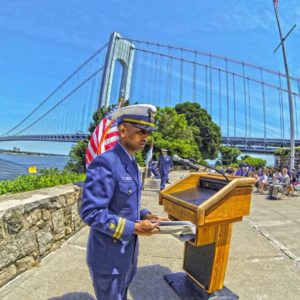
Welcome to the show where we inspire you to follow your dream. I am your host Carl Valeri and joining me today is someone who has had an exciting career and helps many people realize their career goals.
Goliath Demisie is an airline pilot and recruiter with ExpressJet Airlines, Lieutenant in the United States Coast Guard as a recruiter, and Southeast regional director for the Organization Of Black Aerospace Professionals. Goliath has had a truly blessed life and is more than willing to help others create a successful career.
As you can tell Goliath has much to share with us on a variety of topics so let’s get started. Welcome to the Podcast Goliath.
In this episode we have two interviews. The first with Craig Pieper the Editor in Chief and Founder of Aero Crew News. And the second interview is with Christian, a student from Central Florida Aerospace Academy in Lakeland, Florida.
Before We Begin a few announcements:
Many of you have written asking how you can sponsor or advertise on Aviation Careers Podcast. Now there is an easy solution. Go to AviationCareersPodcast.com and click on the sponsorship tab. By sponsoring an episode your message will be heard by thousands in your specific industry or interest group.
Also don’t forget to visit our scholarships page and review our new search function. After much feedback from users of the scholarships guide we have decided to finally place an easy to use search function in the scholarships guide. Search by category, age, region, and more. But before we finish the entire search engine we need your help. Please go to AerospaceScholarships.com and click on the search scholarships link. Review the different tables we have set up and then complete the short survey at the bottom. This will help us better serve your needs.
Interview with Craig Pieper:
Craig is responsible for the content, layout design, website design and organization of the material and people producing the material for the magazine. Craig is also the founder of another company called Pieper Training Aids. Pieper Training Aids manufactured two aviation-training devices, they were known as Holding Pattern Aid and Inoperative Instrument Aid. As a matter of fact you can see my review of Pieper Training Aids on YouTube. Craig is also a Captain for a regional airline with a type rating in the Embraer 145 and has logged over 6,000 hours of flying time since his introductory flight on November 14th, 1992.
Welcome to the podcast Craig.
Craig and I Discuss:
Why you should read Aero Crew News.
Our flying together and how small the aviation world is.
The vision of the Central Florida Aerospace Academy is to promote the lifelong process of learning by challenging students with a rigorous curriculum and tailored hands-on experiences with special focus on science, technology, engineering, and math. The academy will respond to the needs of industry by placing emphasis on teamwork, individual achievement, skill development, creativity, and innovation, as well as critical thinking.
As students are prepared to be productive and responsible members of the workforce, the academy will instill in them an appreciation for professionalism, ethical behavior, and an awareness of global opportunities, while developing self-worth, high expectations, and mutual respect among a diverse population of students and staff.
Students attend high school every day at the Lakeland Regional Airport and yet have access to all of the benefits of high school (sports, clubs, etc.)
What was your first flight you did for the company?
Why did you want to become a pilot and why this company?
Is this what you thought you would be doing when you were younger?
Was your first flight stressful?
Are you happy with what you’re doing now or would you want to go to the bigger types planes?
What is the biggest plane you have piloted and how far did you go?
Without being specific, what kind of salary do you make and how long has it taken you to get to that level? (It is perfectly fine to decline to answer) You can find this information on the bureau of labor statistics website.
How many flights do you make in a day?
What kind of hours do you work in a week?
Do they make you wear a uniform here or is it casual?
Is your workplace strict or have a casual atmosphere
Did you have to learn any other languages for this job?
Have you had any emergencies during flights? If Yes, how did you get out of the situation safely?
Have you had to change your path because of a storm?
What kind of hours do you work?
What kind of education do you have?
Did you do well in school?
What is the coolest thing you’ve done?
Where is the coolest place you’ve been?
What was the job you had before this one and has it helped you here?
What was the biggest challenge of getting this job?
In this episode we will read e-mails and answer questions including “How does bidding for flights work? and Should I own a plane to build time?”. Don’t forget to send your questions and feedback to feedback@aviationcareerspodcast.com.
Preparing for an interview? Need someone to review your resume and cover letter? Seeking career advice? Consider our couching services.
To Learn more about our career Coaching click here or on the coaching tab above.
50% off Summer Sale at ExpertAviator.com. Don’t forget to use the coupon code “summer” and receive 50% off products and services at ExpertAviator.com. ExpertAviator includes articles explaining basic to technical aspects of all things aviation. Watch the first video of our new series Advanced Holding Patterns” for free by clicking here.
Listener Feedback and Questions:
I’d like to know if you or your guests have any experience owning an airplane. Would it make sense to buy a cheap trainer aircraft as an easy way to start a business and employ my brother to train me as well as others to offset the cost of expensive flight hours?
Could you explain how bidding works?
How much vacation time does a pilot get?
The pay where I work is substantially better than a regional and I am unsure whether I should make the jump to a regional.
Which regional should I choose?
How do you log right seat time?
Here in Australia I’m really struggling to get my aviation career off the ground.
From listening to the podcast, it sounds like there are more jobs that need to be filled in the USA. Is this really the case?
When should a CFI be a contractor vs employee?
When should a CFI buy insurance and what type of insurance?
Welcome to this episode of Aviation Careers Podcast, where we answer your questions about all aspects of careers in Aviation and Aerospace!
Announcements:
The new version of the 2016 Scholarships Guide will be out soon on the website and on Amazon. If you already purchased the guide on Amazon, you can simply re-download the book to get the new version.
In my own Aviation exploits, I recently got to fly in to Liberia, Costa Rica for the first time.
We just released a video series on Holding Patterns on our Expert Aviator site, in conjunction with Chris Pezalha, who literally wrote the book on holding patterns and all you need to know about them. Use ACP10 to get 10% off.
Questions answered on this Episode:
Should I apply as a First Officer for a regional to build total hours, or stay as a Flight Instructor to build PIC time?
There is a different path for everyone, from a listener living in Hong Kong and working on his pilot career.
A listener enjoyed fixed wing and low flyer interviews. You can find them all here.
An inspiring story from a Canadian who worked as a barber to pay for flight school.
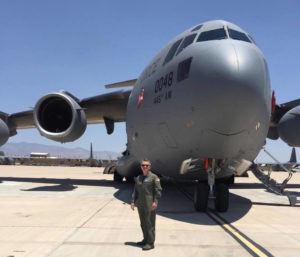
Today we have a special guest who is transitioning from an Air Force loadmaster to professional pilot. Larry Unger is truly an inspiration. If you are considering transitioning from the military to a professional pilot you need to hear his story.
Larry is an advocate for those considering serving their country through a career in the military. He explains how military service will enhanced your life and career.
Joining me today is Russ Roslewski who has a special connection to Larry’s flying career. Listen the episode to learn more.
In This episode we discuss:
Flying in the C-17 around the world.
The benefits of choosing an aviation career in the military.
Positions including: mechanic, crew chief, and loadmaster.
Transitioning from the military to a professional pilot.
Welcome to the podcast where we inspire you to pursue your career goals and give you an inside look at many aviation careers. Today we have a special guest who will discuss the challenges and rewards of moving to a new country and changing careers to a satisfying career as an airline pilot.
Announcements:
Congrats to one of our coaching clients for a successful completion of the interview and acceptance to the Turkish Airlines Ab Initio Program.
Services:
Coaching
Interview Preparation
Resume Review
Social Media Review
Career Mentorship
Membership:
Numerous online courses
The online scholarships guide.
Books:
Scholarships guide in e-book format both as a pdf and amazon kindle version.
Click on the Membership tab to view all the free items and benefits of becoming a premium member. For one on one coaching click on the coaching tab.
Now on with the show!
Lenny and I discuss:
His early life and moving to America.
Learning the was of a new country and language.
Changing careers.
How he developed a passion for aviation.
Why he decide to change careers and become a pilot.
The career change process.
Where he is now and his progress towards his next career goal.
Advice for those considering changing careers.
Advice for those thinking of changing their country of residence and starting an aviation career.
Welcome back to the show! We have been unintentionally off for a few weeks. I was doing some red-eye flying which pays a bit more but doesn’t allow me to do interviews during the day. I am here today with Tom Wachowski of the Private Jet Podcast, to discuss red-eye flying and answer your questions.
Tom and I defined red-eye flying, and the difference between red-eye and “pink-eye” flying.
Why some people, especially in corporate situations, need to fly red-eye flights.
How red-eye flying effects your body, and what you need to do in order to compensate for it.
Questions from listeners
Pursuing a pilot career as a second career in the regionals at 61 years old.
Should you go for a Class III or Class I Medical?
Clarification on rules for long cross-country solo, and who can accompany you on the flight.
FAR 61.129
(4) Ten hours of solo flight time in a single-engine airplane or 10 hours of flight time performing the duties of pilot in command in a single engine airplane with an authorized instructor on board (either of which may be credited towards the flight time requirement under paragraph (a)(2) of this section), on the areas of operation listed under §61.127(b)(1) that include—
(i) One cross-country flight of not less than 300 nautical miles total distance, with landings at a minimum of three points, one of which is a straight-line distance of at least 250 nautical miles from the original departure point. However, if this requirement is being met in Hawaii, the longest segment need only have a straight-line distance of at least 150 nautical miles; and
(ii) 5 hours in night VFR conditions with 10 takeoffs and 10 landings (with each landing involving a flight in the traffic pattern) at an airport with an operating control tower.
Welcome to episode 99 of the podcast where we give you an inside look at many aerospace careers and help you achieve your career goals. Joining me today is Paul Grieco, scholarship analyst and interview prep consultant; and Tom Wachowski host of The Private Jet Podcast. In this episode, we discuss Recurrent Training, Living on starting pay, and Flying During the Holidays.
Recently I have had the pleasure of coaching some very interesting and motivated aerospace professionals and students. One thing I have been hearing from you is that we have been providing some much needed and nuanced information as to the lives of pilots, flight attendants, engineers, and other professionals. To help you decide if an aerospace career is for you and motivate you during the holidays, I want to talk about working during this holiday season.
Today we are recording this on the eve of Thanksgiving in the United States, so for all of those listening that celebrate this holiday, Happy Thanksgiving! This is a holiday we give thanks and I want to start off with giving thanks for having you as a listener and for the amazing team we have here at Aviation Careers Podcast!
Today we discuss:
Preparing recurrent training.
Interview Preparation for Cape Air and CommutAir
Scholarship of the week
Flying during the holidays.
Listener Mail:
Do you have any tips for anyone who is interested in converting to EASA?
Does the solo long cross country have to be done solo without anyone in the airplane except yourself, or can it be done with passengers?
Can you actually make a living on $40 an hour your first year and pay your school bills?
How do the airlines view multi or single engine turbine time compared to flight instruction?
Do you know of any Airframe & Powerplant scholarships?

 Welcome to a new episode! We are trying a new format, which is shorter and should lead to more episodes. Today we have questions about GI benefits, building hours towards a pilot job, and specialized training once you land that dream pilot job.
 Welcome to the show where we inspire you to follow your dream. I am your host Carl Valeri and joining me today is someone who has had an exciting career and helps many people realize their career goals.




 Welcome to this episode of Aviation Careers Podcast, where we answer your questions about all aspects of careers in Aviation and Aerospace!
 Today we have a special guest who is transitioning from an Air Force loadmaster to professional pilot. Larry Unger is truly an inspiration. If you are considering transitioning from the military to a professional pilot you need to hear his story.
 Welcome to the podcast where we inspire you to pursue your career goals and give you an inside look at many aviation careers. Today we have a special guest who will discuss the challenges and rewards of moving to a new country and changing careers to a satisfying career as an airline pilot.
 Welcome back to the show! We have been unintentionally off for a few weeks. I was doing some red-eye flying which pays a bit more but doesn’t allow me to do interviews during the day. I am here today with Tom Wachowski of the
  Welcome to episode 99 of the podcast where we give you an inside look at many aerospace careers and help you achieve your career goals. Joining me today is Paul Grieco, scholarship analyst and interview prep consultant; and Tom Wachowski host of The